Waqar Seo - Berjaya Electronics Trading LLC
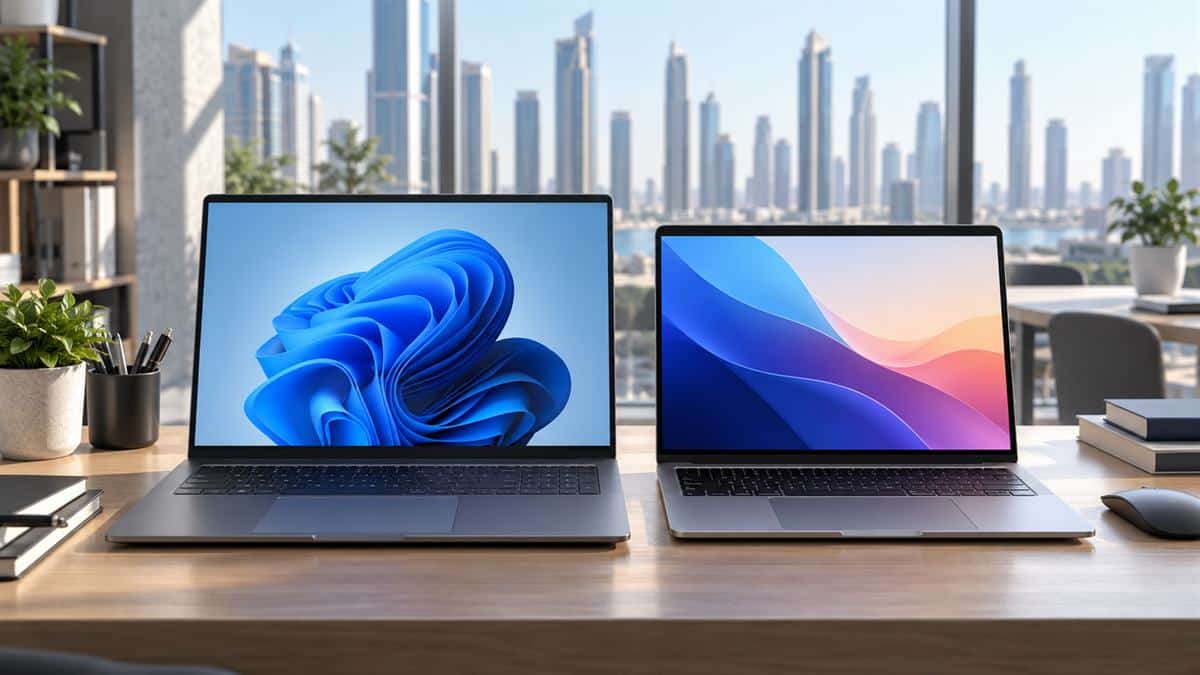
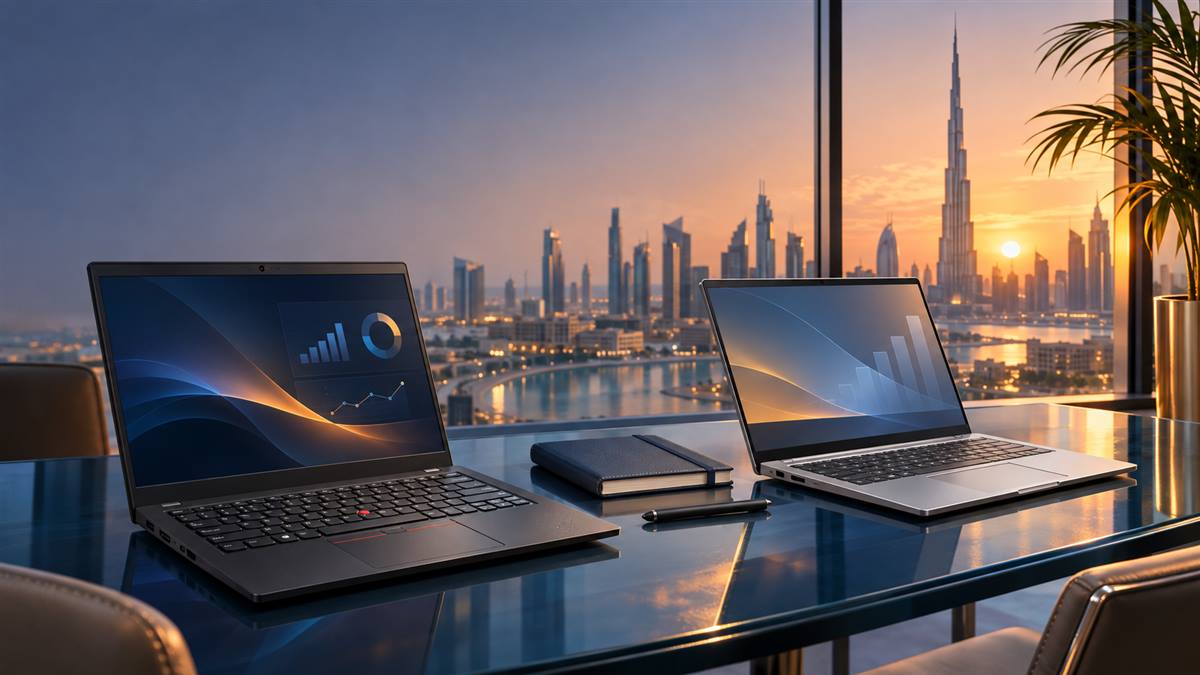
ThinkPad T14 and Dell Pro 14 business laptops on a Dubai office desk at sunset

ThinkPad T14 vs Dell Pro 14: Which Is Better for Business Teams in Dubai?

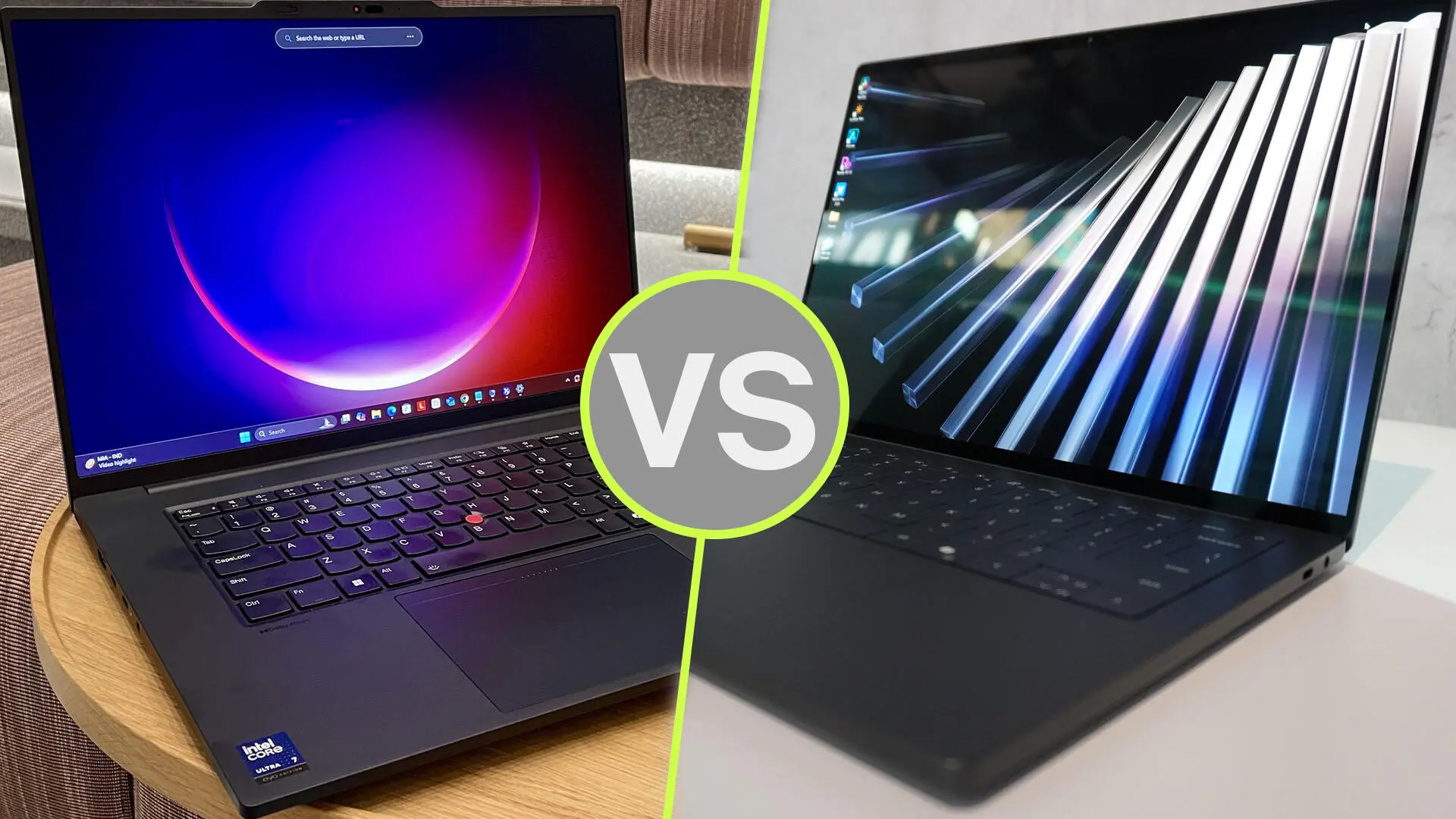
Dubai business teams choosing a 14-inch work laptop often narrow the shortlist to Lenovo’s ThinkPad T14 and Dell’s Pro 14. Both offer Windows 11 Pro and 512GB SSD storage in the configurations listed by UAE Tech Dubai, but they target different budgets and priorities.

For a clear comparison, this guide uses the Lenovo ThinkPad T14 Gen 5 21MMS7UN00 and the Dell Pro 14 Premium PA14250. Dell Pro 14 Plus is a separate model line, so check the exact model name and configuration before buying.

Quick verdict

The ThinkPad T14 Gen 5 is the stronger value for most business teams. Its listed price is lower, it has a 12-core Intel Core Ultra 7 155U, 16GB of DDR5 SODIMM memory, useful built-in Ethernet and a longer listed warranty. It suits office applications, browser-based work, video meetings, CRM and ERP systems, and travel between home and office.

The Dell Pro 14 Premium is the premium choice for staff who need 32GB of fast onboard memory, Wi-Fi 7, a higher-resolution touch display and a newer AI-capable platform. Its Core Ultra 7 268V includes a 48-TOPS NPU, which can help with supported local AI workloads. The Dell costs substantially more, and its memory is listed as onboard.

ThinkPad T14 vs Dell Pro 14: listed configurations

Feature ThinkPad T14 Gen 5 (21MMS7UN00) Dell Pro 14 Premium (PA14250)
Processor Intel Core Ultra 7 155U, 12 cores / 14 threads Intel Core Ultra 7 268V vPro, 8 cores, up to 5.0GHz
Memory 16GB DDR5-5600 SODIMM 32GB LPDDR5x-8533, onboard
Storage 512GB PCIe Gen 4 SSD 512GB SSD
Display 14-inch WUXGA (1920 × 1200) IPS touch, 400 nits, anti-glare 14-inch touch QHD+ as listed; confirm the exact panel option before ordering
Wireless Wi-Fi 6, Bluetooth 5 Wi-Fi 7, Bluetooth 5.4
Ports highlighted in the listings Two USB-A, two Thunderbolt 4 USB-C, HDMI 2.1, Ethernet and audio Two Thunderbolt 4 USB-C, USB-A, HDMI 2.1 and audio
Operating system Windows 11 Pro Windows 11 Pro
Price shown when checked AED 4,599 AED 9,500
Warranty shown on the product page 36 months 12 months

Prices, stock and warranty terms can change. Check the live product pages for the current offer and exact configuration. The Dell page advertises a QHD+ touch display, but panel options can vary; confirm the panel technology shown for the unit you are ordering.

Performance for everyday business work

The ThinkPad’s Core Ultra 7 155U configuration has more CPU cores and threads on paper, making it a capable fit for business multitasking: spreadsheets, many browser tabs, office applications, video calls and line-of-business software. Its 16GB of memory is suitable for these common workloads, although teams running large datasets, virtual machines or several demanding applications at once may prefer a higher-memory configuration.

Dell’s Core Ultra 7 268V is built around a different balance: 32GB of high-speed onboard memory, integrated Intel Arc graphics and a 48-TOPS NPU. That makes the listed Dell configuration attractive for users who keep many applications open, work with supported AI features or want more graphics capability than a typical office laptop. NPU performance only matters when the software you use supports it; it is not a reason by itself to pay more.

Neither laptop is a workstation for heavy 3D rendering or specialist CAD. For those workloads, compare a workstation-class model with a certified graphics configuration.

Memory, storage and fleet planning

The T14 listing specifies DDR5 SODIMM memory, which gives an IT team a more serviceable memory format than the Dell’s onboard LPDDR5x. Confirm the number of available slots and supported capacity for the exact unit before planning upgrades. Dell’s 32GB onboard configuration starts with twice the memory, but the onboard memory is not a routine upgrade path after purchase.

Both listings include a 512GB SSD and Windows 11 Pro, a practical baseline for managed company devices. If your team uses local project archives, video files or large engineering datasets, review storage requirements before standardizing on either SKU.

Displays and hybrid meetings

The ThinkPad T14’s 14-inch WUXGA touchscreen is a practical productivity format: 16:10 workspace, 400-nit brightness and an anti-glare surface. Its 5MP RGB-IR camera can support clearer calls and Windows sign-in features, subject to the software and configuration in use.

Dell’s listing positions the Pro 14 Premium as the sharper-screen option with a touch QHD+ display. Because Dell systems can be ordered with different panel options, confirm that the delivered PA14250 matches the display you expect. For mostly spreadsheets, email and web apps, the T14’s WUXGA panel is likely the more cost-conscious fit; for detailed on-screen work and premium presentation, the Dell’s QHD+ configuration may justify the upgrade.

Ports and desk setup

For Dubai offices that use wired networks or shared conference-room equipment, the ThinkPad’s built-in RJ-45 Ethernet port can reduce the need to carry an adapter. The listing also includes two Thunderbolt 4 USB-C ports, two USB-A ports and HDMI 2.1, giving teams a useful mix for docks, displays and older accessories.

The Dell offers two Thunderbolt 4 ports, USB-A and HDMI 2.1, with Wi-Fi 7 for compatible networks. It can suit a modern desk built around a USB-C dock, but teams that depend on wired Ethernet should account for a USB-C adapter or compatible dock.

Which laptop should a Dubai business team buy?

  • Choose the ThinkPad T14 Gen 5 for general office teams, procurement at scale, wired-network access, a lower purchase price and the longer warranty currently shown on the listing.
  • Choose the Dell Pro 14 Premium for users who benefit from 32GB onboard memory, Wi-Fi 7, the higher-resolution touch display and supported on-device AI features.
  • Compare the total cost of ownership for fleet orders. Include docks, adapters, warranty coverage, memory needs, support arrangements and any software that requires a particular processor or display.
  • Check the exact SKU before placing a bulk order. Product names such as Dell Pro 14, Pro 14 Plus and Pro 14 Premium refer to different configurations.

Final recommendation

For most teams buying a dependable business laptop in Dubai, the ThinkPad T14 Gen 5 offers the better balance of price, ports and serviceability. The Dell Pro 14 Premium is easier to recommend for a smaller group of employees who will use its 32GB memory, QHD+ touch configuration, Wi-Fi 7 or AI-capable platform every day.

Compare the live ThinkPad T14 Gen 5 price and availability with the Dell Pro 14 Premium configuration at UAE Tech Dubai, a Berjaya Electronics company serving customers in Dubai and across the UAE.

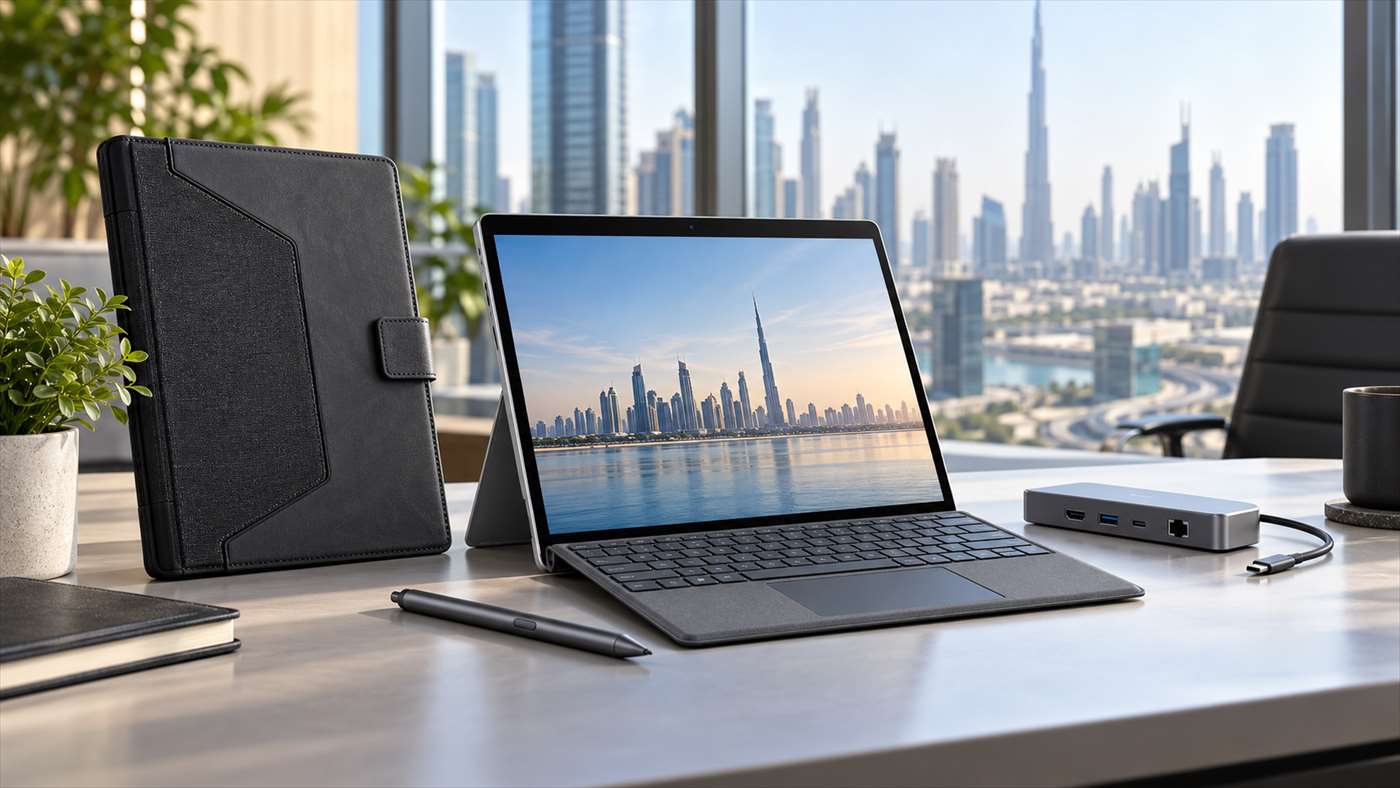
Illustrative mobile workstation displaying architectural and mechanical CAD models in a Dubai design studio

ThinkPad P16 Gen 3 vs P16 Gen 2: Is the Upgrade Worth It?

Looking at the ThinkPad P16 Gen 3 vs P16 Gen 2? The Gen 3 brings a newer Intel Core Ultra platform, Thunderbolt 5, a larger 99.9Wh battery and more internal SSD capacity. But the upgrade is not automatically a graphics-performance win. UAE Tech Dubai’s current listings pair the Gen 3 with an RTX PRO 1000 Blackwell GPU and the Gen 2 with an RTX 2000 Ada GPU, so the right choice depends on your applications and exact workload.

Quick verdict: Choose the P16 Gen 3 for newer connectivity, PCIe Gen 5 storage expansion and a newer platform. Consider the P16 Gen 2 if its RTX 2000 Ada configuration better matches your GPU workload and offers the value you need. If you already own a Gen 2, upgrade only when a specific Gen 3 feature solves a real work problem.

ThinkPad P16 Gen 3 vs Gen 2: key differences

Feature ThinkPad P16 Gen 3 (21RQ0012US listing) ThinkPad P16 Gen 2 (21FA0051US listing)
Processor Intel Core Ultra 7 255HX, 20 cores / 20 threads Intel Core i7-14700HX, 20 cores / 28 threads
Graphics NVIDIA RTX PRO 1000 Blackwell, 8GB GDDR7 NVIDIA RTX 2000 Ada, 8GB GDDR6
Memory and storage 32GB RAM, 1TB PCIe Gen 5 SSD 32GB RAM, 1TB PCIe Gen 4 SSD
Display in current listing 16-inch WUXGA IPS, 500 nits Listing title and specification table differ; verify the panel before ordering
Battery capacity 99.9Wh 94Wh
High-speed USB-C 2x Thunderbolt 5 and 1x Thunderbolt 4 2x Thunderbolt 4
Wireless Wi-Fi 7 Wi-Fi 6E

These are the specific UAE configurations linked here, not every possible P16 build. Lenovo sells each generation with multiple processors, graphics options, panels and memory configurations, so compare the full model number rather than relying on the generation name alone.

CPU performance: a newer platform, not a guaranteed leap

The listed Gen 3 uses Intel Core Ultra 7 255HX, while the Gen 2 uses Core i7-14700HX. Both are high-power HX processors with 20 CPU cores, but the core and thread layouts differ: the 255HX is listed as 20 cores and 20 threads, while the i7-14700HX has 20 cores and 28 threads. Clock speed alone cannot predict which will finish your project first. Results depend on the application, cooling profile, power limits, memory and the task itself.

The Gen 3 also adds Intel AI Boost with up to 13 TOPS of NPU performance on supported configurations. That can help selected on-device AI tasks, but this is not a reason to assume every AI application will run faster, and the listed NPU figure is below the threshold associated with Copilot+ PCs. For CAD, simulation or rendering, check the requirements and benchmarks for the exact software you use.

GPU choice matters more than the generation label

The Gen 3 listing uses the RTX PRO 1000 Blackwell with 8GB of GDDR7 memory. The Gen 2 listing uses the RTX 2000 Ada with 8GB of GDDR6. Blackwell is the newer GPU architecture, but the RTX PRO 1000 and RTX 2000 are different product tiers. Do not assume the Gen 3 configuration will outperform the Gen 2 in every professional graphics task because it is newer.

For AutoCAD, Revit, SolidWorks, 3D modeling or GPU-accelerated rendering, look up results for the exact GPU and application version you run. Also check whether your workflow benefits from ISV-certified professional drivers and features. If your work is mostly 2D drafting, both configurations may be more than capable; large assemblies, complex models and rendering place more weight on GPU performance and memory.

See the actual ThinkPad P16 Gen 3 RTX PRO 1000 Blackwell configuration and ThinkPad P16 Gen 2 RTX 2000 Ada configuration before comparing price or performance.

Memory, SSD expansion and display options

Both linked UAE models include 32GB of RAM and a 1TB SSD, which is a sensible starting point for demanding office, engineering and design work. The newer platform supports up to three M.2 drives and PCIe Gen 5 storage in supported slots, while the Gen 2 supports up to two M.2 PCIe Gen 4 drives. That extra expansion can matter if you keep large project libraries or local datasets inside the workstation.

Display selection is important for a 16-inch workstation. The Gen 3 listing specifies a 1920 × 1200 WUXGA IPS panel. The Gen 2 product page currently has a discrepancy: its title says WQUXGA, while its specification table says WUXGA. Confirm the exact panel resolution with UAE Tech Dubai before ordering that SKU so you receive the screen you expect. Other P16 configurations can have different panels; do not assume an option shown for one model number applies to another.

Battery, ports and carrying it between sites

The Gen 3’s 99.9Wh battery is larger than the Gen 2’s 94Wh unit. Capacity is not the same as measured runtime: a high-power CPU, discrete RTX graphics, screen brightness and sustained workloads can drain either workstation quickly. Treat both as desktop replacements for demanding work, and plan to use the supplied power adapter for long rendering, simulation or gaming sessions.

Thunderbolt 5 is a practical Gen 3 improvement for compatible docks, fast storage and multi-display setups. The Gen 3 listing also includes a Thunderbolt 4 port, 2.5Gb Ethernet, HDMI and an SD Express card reader. The Gen 2’s two Thunderbolt 4 ports are still useful for common docks and displays. If your office already uses TB4 docks, the Gen 2 may meet your connectivity needs without an immediate upgrade.

Lenovo lists the Gen 3 starting at 2.54kg, although the actual weight varies by screen, battery and configuration. Both P16 generations are substantial mobile workstations; check the weight and power adapter for the precise SKU if you commute daily around Dubai or travel between client sites.

Should you buy the P16 Gen 3 in Dubai?

Buy the Gen 3 if you are choosing a new workstation and want Thunderbolt 5, a newer platform, PCIe Gen 5 storage options, a slightly larger battery, or the Blackwell graphics configuration available in the current listing. It is also the more forward-looking choice if you plan to add fast storage or compatible peripherals over the workstation’s service life.

Choose the Gen 2 if the RTX 2000 Ada is a better fit for your software, you want its specific performance tier, or the price difference makes the older configuration a stronger value. Its Core i7-14700HX remains a capable workstation processor, and Thunderbolt 4 is still fast enough for many professional desks.

If you already own a P16 Gen 2, keep it unless you can point to a workload, storage expansion need or Thunderbolt 5 accessory that justifies the cost. Moving to a newer model number alone is not a performance plan. Before buying in Dubai, confirm the exact model code, display resolution, GPU, RAM, SSD, warranty and current UAE price on the product page.

Common questions

Is the ThinkPad P16 Gen 3 always faster than the Gen 2?

No. The processor and platform are newer, but application results vary. The current Gen 3 and Gen 2 listings also use different RTX GPU tiers, so compare the exact graphics configuration and software benchmarks.

Is the P16 Gen 3 a Copilot+ PC?

The listed Core Ultra 7 255HX platform includes an NPU rated up to 13 TOPS. Do not assume it meets Copilot+ PC requirements; check Microsoft’s current device requirements and the exact model configuration.

Which model is better for Revit or SolidWorks?

Either may suit professional workloads, but choose by the exact GPU, application certification, project size and tested performance. For the linked UAE SKUs, compare RTX PRO 1000 Blackwell against RTX 2000 Ada rather than treating the Gen 3 name as an automatic graphics upgrade.

Does the Gen 2 listing have a WUXGA or WQUXGA screen?

The current product title and specification table disagree. Ask UAE Tech Dubai to confirm the panel on model 21FA0051US before you place an order.

UAE Tech Dubai, operated by Berjaya Electronics Trading LLC, lists both ThinkPad P16 workstation configurations for buyers in Dubai and across the UAE. Check each product page for current availability, pricing, delivery details and warranty terms.

Dell 16 Plus and MacBook Air laptops side by side for students and office workers in Dubai

Dell 16 Plus vs MacBook Air: Which Should Students and Office Workers in Dubai, UAE Buy?

Dell 16 Plus vs MacBook Air UAE: Which one should Dubai students and office workers buy? The right choice depends on how you study or work. The Dell offers a 16-inch touch display, Windows 11, 32GB memory and a 1TB SSD. The MacBook Air is lighter, has a sharper display and is known for long battery life, but the UAE Tech Dubai listing compared here has 8GB memory and 256GB storage.

To make the choice practical, this guide compares the specific Dell 16 Plus DB16255 and 15.3-inch MacBook Air M3 configurations listed by UAE Tech Dubai. Prices and stock can change, so check each product page before ordering.

Quick comparison: Dell 16 Plus vs MacBook Air

Feature Dell 16 Plus DB16255 MacBook Air M3, 15.3-inch
Current UAE Tech Dubai listing price AED 5,950 AED 5,290
Processor AMD Ryzen AI 7 350, 8 cores Apple M3, 8-core CPU
Memory and storage 32GB LPDDR5X, 1TB SSD 8GB unified memory, 256GB SSD
Display 16-inch, 1920 × 1200, touch, 300 nits 15.3-inch Liquid Retina, 2880 × 1864, 500 nits
Operating system Windows 11 Home macOS
Graphics Integrated AMD Radeon graphics Integrated Apple GPU
Weight About 1.83 kg About 1.51 kg
Touchscreen Yes No

The Dell costs AED 660 more in the listed configurations, but comes with four times the memory and storage capacity, plus a touchscreen and a larger display. The MacBook Air counters with a brighter, higher-resolution screen and a lighter body.

What you get with the Dell 16 Plus DB16255

The Dell 16 Plus DB16255 is the better fit if your workload benefits from Windows and more room to multitask. Its AMD Ryzen AI 7 350 processor has 8 cores and an NPU rated up to 50 TOPS. With 32GB LPDDR5X memory and a 1TB NVMe SSD, it gives you more headroom for large spreadsheets, browser tabs, research files, coding tools, and several office apps open at once.

The 16-inch 16:10 touchscreen is useful for reading long documents, comparing spreadsheets, and navigating presentations. Its 1920 × 1200 resolution is practical for everyday work, although the MacBook Air panel is sharper and brighter. The Dell’s integrated Radeon graphics suit video playback, everyday photo editing, and light creative work; this configuration is not a substitute for a laptop with a dedicated graphics card for demanding 3D or modern high-end gaming.

Connectivity is a strong point for office desks and classrooms: the listed configuration includes two USB-C ports with DisplayPort and power delivery, USB-A, HDMI 1.4, and a headset jack. That can reduce the need for adapters when you connect a presentation screen or older USB accessory. The Dell weighs about 1.83 kg, so it is the less convenient choice if you carry your laptop between campus, home, and the office every day.

See the live Dell 16 Plus price and specifications in Dubai, UAE before buying. At the time this guide was prepared, the page showed AED 5,950, in-stock status, 2–3 day estimated UAE delivery, and a 12-month warranty.

What you get with the 15.3-inch MacBook Air M3

The MacBook Air M3 prioritizes portability, display quality, and a quiet macOS experience. Apple’s 15.3-inch Liquid Retina display has a native 2880 × 1864 resolution and a published brightness rating of 500 nits. Text and photos look crisp, and the screen is a comfortable size for classes, email, documents, and video calls without making the laptop as large as a 16-inch Windows model.

The M3 chip handles everyday productivity smoothly, including web research, presentations, video meetings, and light-to-moderate creative tasks. Apple rates the 15-inch M3 Air for up to 15 hours of wireless web use under its test conditions. Real battery life varies with screen brightness, apps, calls, and Wi-Fi, so treat that figure as a manufacturer estimate rather than a guarantee for every workday.

At about 1.51 kg, the Air is easier to carry. It also fits naturally into an Apple setup: iPhone users can benefit from familiar services such as AirDrop and continuity features. Its trade-offs are the particular UAE Tech Dubai stock configuration’s 8GB unified memory and 256GB SSD, and the smaller port selection: MagSafe charging, two Thunderbolt/USB-C ports, and a headphone jack. You may need a hub for HDMI or USB-A devices.

Buying context: the linked MacBook Air listing is an M3 model, not Apple’s newest generation. Apple has since introduced the M5 MacBook Air. If you want the latest MacBook Air or more than 8GB of memory, compare current UAE availability and pricing before purchasing this older stock configuration.

Check the MacBook Air M3 listing in Dubai for today’s price, color, stock, and warranty details. The page showed AED 5,290 and a 12-month warranty when researched.

Which laptop is better for students in Dubai, UAE?

For business, accounting, data analysis, and general university work, both laptops can handle notes, online classes, Office documents, presentations, and research. The deciding question is whether your course or campus requires Windows-only software. Some engineering, architecture, and technical courses rely on Windows versions of specialist applications. Confirm the required operating system with your university before choosing macOS.

Choose the Dell if your course requires Windows, you use specialist Windows software, you want a touchscreen, or you keep many demanding apps open. Its 32GB RAM and 1TB SSD offer more breathing room for projects, downloaded lecture material, and local files.

Choose the MacBook Air if your work is browser- and document-focused, you value a lighter bag and longer unplugged use, and your apps are fully supported on macOS. Before buying, consider whether 8GB memory and 256GB storage are enough for your degree and how long you plan to keep the laptop.

Which is better for office workers?

The Dell makes more sense for teams standardized on Windows, Microsoft business tools, Windows VPN or security software, and office peripherals that connect through USB-A or HDMI. Its 16-inch touch screen can also be useful for reviewing reports side by side. Ask your IT team about required applications, device management, and external monitors before ordering.

The MacBook Air suits people who work primarily in cloud apps, use macOS already, or want a compact machine for meetings and travel. Microsoft 365 apps are available for Mac, but specialized workflows and company tools can differ from their Windows versions. Confirm compatibility with your employer before switching platforms.

Battery, display, and portability: the practical trade-off

Apple publishes up to 15 hours of wireless web use for the 15-inch M3 Air, while Dell lists a 64Wh integrated battery for the DB16255. Those figures describe different things, and a battery capacity alone does not tell you how many hours you will get. Screen brightness, video calls, background apps, and performance mode all change runtime. If you need a laptop away from a charger for long classes, the Air has the clearer published web-browsing estimate; if the 16-inch touch screen and higher memory capacity matter more, the Dell may be worth carrying.

For reading and spreadsheets, the Dell’s larger touch display gives more physical workspace. The MacBook Air’s 500-nit panel has greater resolution and brightness, which is helpful for sharp text and media. Neither screen should be judged by size alone: the right choice depends on whether you value workspace or pixel density and portability.

Verdict: Dell 16 Plus or MacBook Air?

For most students and office workers who need Windows, multitasking capacity, and storage, the Dell 16 Plus DB16255 is the stronger specification-per-dirham choice: it costs AED 660 more than the listed M3 Air but includes 32GB RAM, a 1TB SSD, a 16-inch touchscreen, and Windows 11.

Pick the MacBook Air M3 if portability, its sharper display, Apple ecosystem, and macOS are your priorities—and if the listed 8GB/256GB configuration suits your workload. Because this is an older M3 stock model and Apple’s M5 Air is now available globally, compare newer local MacBook prices before placing an order.

UAE Tech Dubai, registered as Berjaya Electronics Trading LLC, serves customers in Dubai and across the UAE. Check each product page for current stock, delivery, warranty, and price before checkout.

Is Dell 16 Plus better than MacBook Air for students?
It is better for students who need Windows software, a touchscreen, and more memory and storage. The MacBook Air is a better match for students who prioritize a lighter laptop and macOS-compatible coursework.

Can a MacBook Air replace a Dell laptop for office work?
Yes, if your employer’s apps and security tools support macOS. Check Windows-only business software, VPN requirements, and external monitor support with your IT team first.

Which is lighter, Dell 16 Plus or 15-inch MacBook Air?
The 15-inch M3 MacBook Air is lighter at about 1.51 kg; Dell lists the 16 Plus DB16255 from about 1.83 kg.

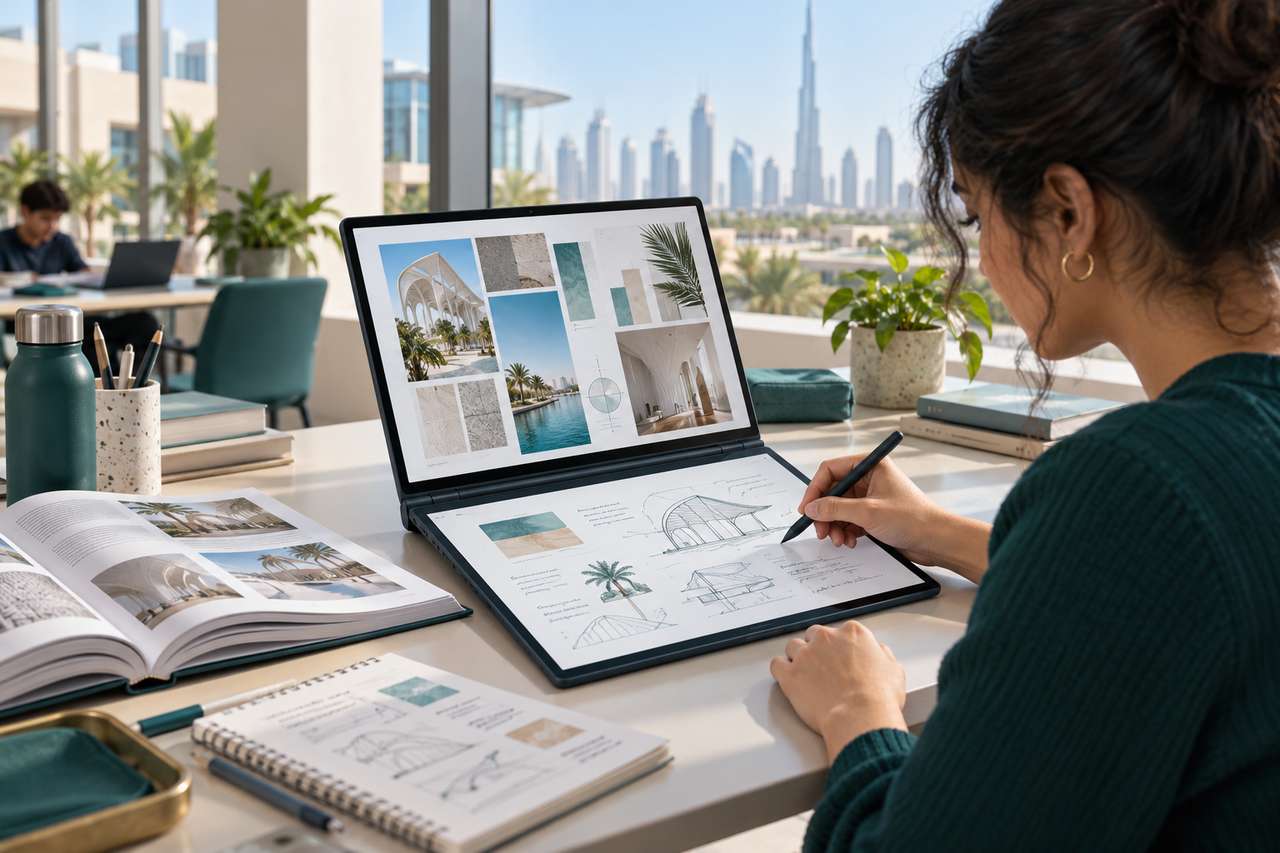
Lenovo Yoga Book 9 dual-screen OLED laptop for student notes and design work

Lenovo Yoga Book 9 for Students, Designers and Note-Takers: Pen, OLED and Battery

Lenovo Yoga Book 9 for students who move between lectures, research and handwritten notes offers a different approach to a standard laptop: two touch OLED screens, a rechargeable Yoga Pen and a separate Bluetooth keyboard. That extra workspace is useful for reading and writing side by side, though the second screen affects battery life and requires some adjustment.

This guide looks at the UAE Tech Dubai-listed Lenovo Yoga Book 9 14IAH10 (83KJ0001US), with Intel Core Ultra 7 255H, 32GB memory and 1TB SSD. It is a practical buying guide based on the listed configuration, Lenovo’s published specifications and independent reviews; it is not a claim that UAE Tech Dubai ran its own battery or performance tests.

Lenovo Yoga Book 9 specifications at a glance

  • Processor: Intel Core Ultra 7 255H, 16 cores
  • Memory and storage: 32GB LPDDR5x memory and 1TB PCIe 4.0 SSD
  • Displays: Two 14-inch 2.8K (2880 × 1800) OLED touchscreens, up to 120Hz
  • Pen: Lenovo Yoga Pen with 4,096 pressure levels and tilt detection
  • Graphics: Integrated Intel Arc 140T graphics
  • Battery: 88Wh
  • Weight: Starting at about 1.219kg
  • Wireless and ports: Wi-Fi 7 and three Thunderbolt 4 ports

These are the specifications for the 14IAH10 family and the configuration listed in the UAE Tech Dubai Lenovo Yoga Book 9 product page. Lenovo’s PSREF notes that configurations and battery results can vary by region and usage.

Why two OLED screens can help with study and research

Each screen is a 14-inch 2.8K OLED touchscreen with a 16:10 aspect ratio, a maximum 120Hz refresh rate and specified 100% DCI-P3 colour coverage. In book mode, keep lecture slides, a browser or an e-book on the upper panel while placing notes, a document or a reference image below. In notebook mode, the screens can be extended as a larger vertical workspace.

That split can reduce constant app switching during research: read a brief on one display, draft on the other, and use touch or the pen to mark up material. Lenovo’s User Center also supports window transfer and cross-screen browsing. For the setup steps, see our Lenovo Yoga Book 9 dual-screen modes and productivity guide.

There is a learning curve. A two-panel layout is most useful at a desk, library table or study space where the included stand and keyboard can be positioned comfortably. For quick typing on a crowded lecture-room desk, a regular laptop with a built-in keyboard and touchpad may feel simpler.

Is the Yoga Pen useful for note-taking?

The Yoga Pen is more than a finger-operated stylus: Lenovo specifies 4,096 pressure levels and tilt detection, which can make handwritten notes, PDF markups, diagrams and rough sketches feel more natural in compatible apps. Students can keep a reading or lecture window open while writing on the second display. Designers can sketch ideas, annotate mock-ups or collect visual references without carrying a separate tablet.

The 14IAH10 specification sheet describes the pen as rechargeable. The UAE Tech Dubai listing for this configuration lists the Yoga Pen and Bluetooth keyboard; check the product page and box contents for the exact package before ordering, since regional bundles can differ. The keyboard is separate and wireless, and the PSREF lists no physical touchpad. You can use the on-screen touchpad or add a mouse if your workflow depends on pointer control.

What can students, designers and creators expect from performance?

The Core Ultra 7 255H and 32GB of memory are a strong fit for everyday study and office work: research with many browser tabs, presentations, spreadsheets, video calls, programming coursework and creative applications. The 1TB SSD leaves room for class files, project assets and a local photo library.

For design, the dual OLED panels and their wide specified colour gamut are useful for reviewing layouts, references and images. The integrated Arc 140T graphics can handle general creative work and lighter GPU tasks, but this is not a workstation with a discrete graphics processor. If your course or studio relies on demanding 3D rendering, large simulations or GPU-heavy professional effects, compare it with a laptop built around a discrete GPU before buying.

Memory is soldered, so choose the capacity you expect to need over the laptop’s lifetime. The listed 32GB configuration is generous for multitasking, but it cannot be upgraded later.

Lenovo Yoga Book 9 battery life: rated figures versus real use

The 88Wh battery is sizeable for a 14-inch device, but both OLED panels use power when active. Lenovo’s published maximum figures for the 14IAH10 are up to 9.95 hours in dual-screen book mode on MobileMark 30 at 250 nits, or up to 11.4 hours of local 1080p video playback at 150 nits. Lenovo also lists higher results in single-screen notebook mode. These are controlled benchmark or playback conditions, not a promise of a full day of mixed study or design work.

Independent results give a more grounded picture. Notebookcheck recorded about 6 hours 7 minutes in its Wi-Fi browsing test with both screens active on a Core Ultra 7 255H review unit. Tom’s Hardware measured 6 hours 49 minutes in its own mixed browsing, video and graphics battery test at 150 nits. Their protocols differ from Lenovo’s tests, so the figures are not direct comparisons, but they show why a dual-screen workflow can run shorter than the manufacturer’s maximum rating.

For longer campus days in Dubai, use one screen when you do not need both, lower brightness to a comfortable level, and carry a compatible USB-C charger if you expect extended note-taking, video calls or creative work. Actual runtime changes with brightness, refresh rate, apps, wireless use and power settings.

Who should buy the Lenovo Yoga Book 9 in Dubai?

  • Good fit: students who read and take notes side by side; researchers who work from multiple references; designers who value touch, pen input and colour-rich displays; frequent multitaskers who want a portable two-screen setup.
  • Think carefully: buyers who need long battery endurance with both screens on, prefer a built-in keyboard and touchpad, or often work away from a desk.
  • Choose another class of laptop: creators whose main workload depends on a discrete GPU, upgradeable memory or workstation-grade graphics.

Its appeal is the way it changes the workspace: two OLED panels and pen input in a portable device. The trade-offs are equally clear—battery life depends heavily on how many screens are lit, there is no physical touchpad, and the RAM is fixed. If that balance suits your classes or design workflow, check the Lenovo Yoga Book 9 14IAH10 price, stock and delivery details in the UAE before ordering.

Is the Lenovo Yoga Book 9 good for university students?

It can suit students who read, research and write at the same time, especially when handwritten notes or PDF markup are part of their routine. It is less convenient if you mainly need a traditional laptop posture for fast typing in small spaces.

Does the Lenovo Yoga Book 9 include a pen?

The UAE Tech Dubai listing for the 83KJ0001US configuration lists the Lenovo Yoga Pen and a Bluetooth keyboard. Confirm the exact included accessories and regional warranty on the product page before purchase.

How long does the Yoga Book 9 battery last?

Lenovo lists up to 9.95 hours in a dual-screen MobileMark test and 11.4 hours of local 1080p video playback under specified conditions. Independent Wi-Fi and mixed-use tests have reported around six to seven hours, depending on the test and configuration. Your results will vary with brightness, apps and screen use.

Can the Yoga Book 9 replace a drawing tablet?

It can be convenient for handwritten notes, annotations, concept sketches and lighter illustration tasks. Artists who need a specialised pen display, extensive shortcut controls or dedicated graphics for complex projects may prefer a dedicated tablet or a workstation laptop.

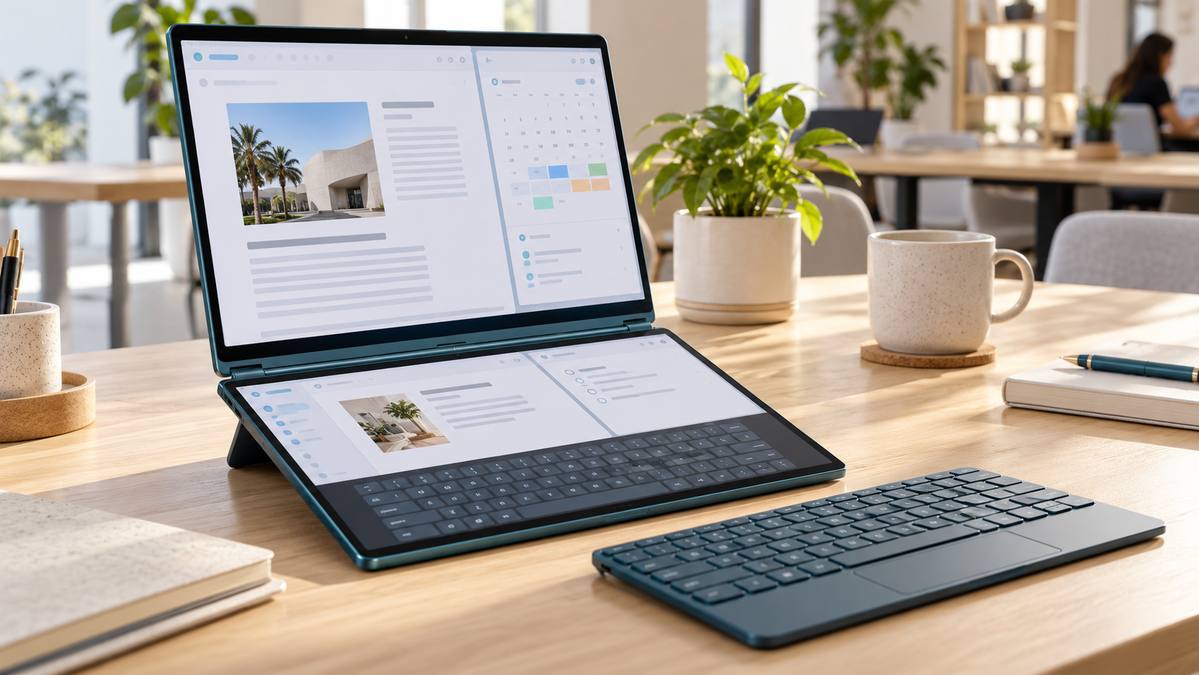
Lenovo Yoga Book 9 dual-screen laptop on a bright workspace in notebook mode

How to Use Lenovo Yoga Book 9 Dual Screens: Modes, Shortcuts and Productivity Setups

To get the most from Lenovo Yoga Book 9 dual screens, set them up as separate Windows displays: keep one app on each panel, move windows with Lenovo’s transfer controls, and choose the physical setup that fits the task. This guide covers the current 14IAH10, with two 14-inch 2.8K OLED touchscreens. Menu labels can change after software updates, so install current Lenovo support updates if your controls look different.

Start with the right dual-screen settings

For most work, set the displays to Extend so each screen has its own desktop. In Windows, open Settings → System → Display and choose “Extend these displays.” You can also press Windows + P and select Extend. If the screens are set to Duplicate, both panels mirror the same content and some Yoga Book features—including the virtual keyboard—are unavailable.

Next, open Lenovo User Center from Windows Search. On the supplied Bluetooth keyboard or Lenovo virtual keyboard, F12 is the User Center hotkey. This app controls the window-transfer assistant, cross-screen browsing, virtual keyboard and touchpad triggers, dual-screen wallpaper, and separate brightness levels. For the 14IAH10, Lenovo also provides YogaBook9 Solutions for Windows 11; keep Lenovo software and Windows up to date.

Choose a Yoga Book 9 setup for the job

Notebook mode: type on one screen, work on the other

In the familiar stacked-screen position, place the Bluetooth keyboard on the lower display when you need a conventional typing posture. Keep email, a video call, or a reference document on the upper screen while you write on the lower one. Without the physical keyboard, the lower panel can show Lenovo’s virtual keyboard and floating touchpad. The virtual keyboard has traditional, floating, and mini layouts, so choose the traditional layout for longer typing and a movable layout for short replies.

Book mode: compare documents side by side

Turn the device into a side-by-side reading setup with the supported folio arrangement. This works well for comparing a brief with a spreadsheet, reading a PDF while taking notes, or keeping a browser beside a writing app. When enabled in User Center, cross-screen browsing can extend a supported webpage or document across both panels. Lenovo notes that some apps do not support this feature, so use two separate windows if a page splits awkwardly.

Smart Folio stand: work at a desk or share a screen

The Yoga Book 9 14IAH10 supports two Smart Folio stand arrangements: one for notebook or book positioning with the Bluetooth keyboard, and another for notebook positioning when you prefer the virtual keyboard. Check the exact product listing for the accessories included with your UAE configuration. A stand setup is useful for a video call or presentation; use a paired Bluetooth keyboard when you need to take notes. Lenovo says cross-screen browsing is available in notebook and book modes, not stand or tablet mode.

Useful Yoga Book 9 shortcuts and touch gestures

  • F12: Open Lenovo User Center from the supplied Bluetooth keyboard or virtual keyboard.
  • F10: Show the floating virtual touchpad on the lower screen.
  • Three-finger tap: Open the floating touchpad after enabling this trigger in User Center.
  • Eight-finger tap on the lower screen: Open the Lenovo virtual keyboard if that activation option is enabled.
  • Five-finger touch on the other screen: Extend a supported window across both displays after enabling Cross-screen Browsing. Use notebook or book mode.
  • Drag a window’s title bar: Hold and drag until Lenovo’s transfer arrows appear, then drop the window on the arrow for the destination screen. Enable mouse or touch transfer in User Center if the arrows do not appear.
  • Windows + P / Windows + Z: Open Windows display modes / Snap Layouts for standard display and window arrangement options.

Three practical productivity layouts

  • Research and writing: Keep source material in the browser above and your notes or document below. Use separate windows for quick switching; try cross-screen browsing for long pages or PDFs.
  • Meetings: Put the call on the upper panel and your agenda, calendar, or notes on the lower panel. A physical Bluetooth keyboard is more comfortable for typing minutes.
  • Spreadsheets and creative work: Keep the main file on one screen and a reference, chat, or asset folder on the other. Use the window-transfer arrows to move an app instead of repeatedly minimizing it.

Fix common dual-screen problems

If an app will not move or span both panels, first confirm that Windows is using Extend, then check that the relevant option is enabled in User Center. Cross-screen browsing is limited to notebook and book mode, and individual apps may not support it. If the virtual touchpad or keyboard does not appear, enable its trigger in User Center or use the system-tray control. Lenovo’s Yoga Book 9 14IAH10 User Guide has model-specific steps and troubleshooting notes.

Is the Yoga Book 9 right for your workflow?

The dual-screen design is most useful if your day involves comparing information, writing while researching, or keeping a meeting and notes visible together. The key is to set Windows to Extend, learn the F12 and F10 shortcuts, and keep a Bluetooth keyboard handy for longer sessions. See the Lenovo Yoga Book 9 14IAH10 product listing at UAE Tech Dubai for the current configuration and availability in Dubai, UAE.

Product has been added to your cart