
Lenovo ThinkPad P16 Gen 3 for AutoCAD, Revit & SolidWorks: Is It Worth It?
Is the ThinkPad P16 Gen 3 worth buying in Dubai for AutoCAD, Revit or SOLIDWORKS? Compare RTX PRO GPUs, RAM options and UAE prices before choosing.

Is the ThinkPad P16 Gen 3 worth buying in Dubai for AutoCAD, Revit or SOLIDWORKS? Compare RTX PRO GPUs, RAM options and UAE prices before choosing.

Is the Surface Laptop 8 worth buying in Dubai? This review covers X2 Elite performance, battery test results, Windows on Arm compatibility and current UAE pricing.
Is the Dell 14S DS14260 worth AED 9,299 in the UAE? Review the Core Ultra 9 configuration, OLED display, 70Wh battery, independent test results, ports and trade-offs for Dubai buyers.
Compare the HP EliteBook 8 G1i and Dell Pro 14 Premium in Dubai, including the listed configurations, display, battery, weight, vPro, price and business use cases.
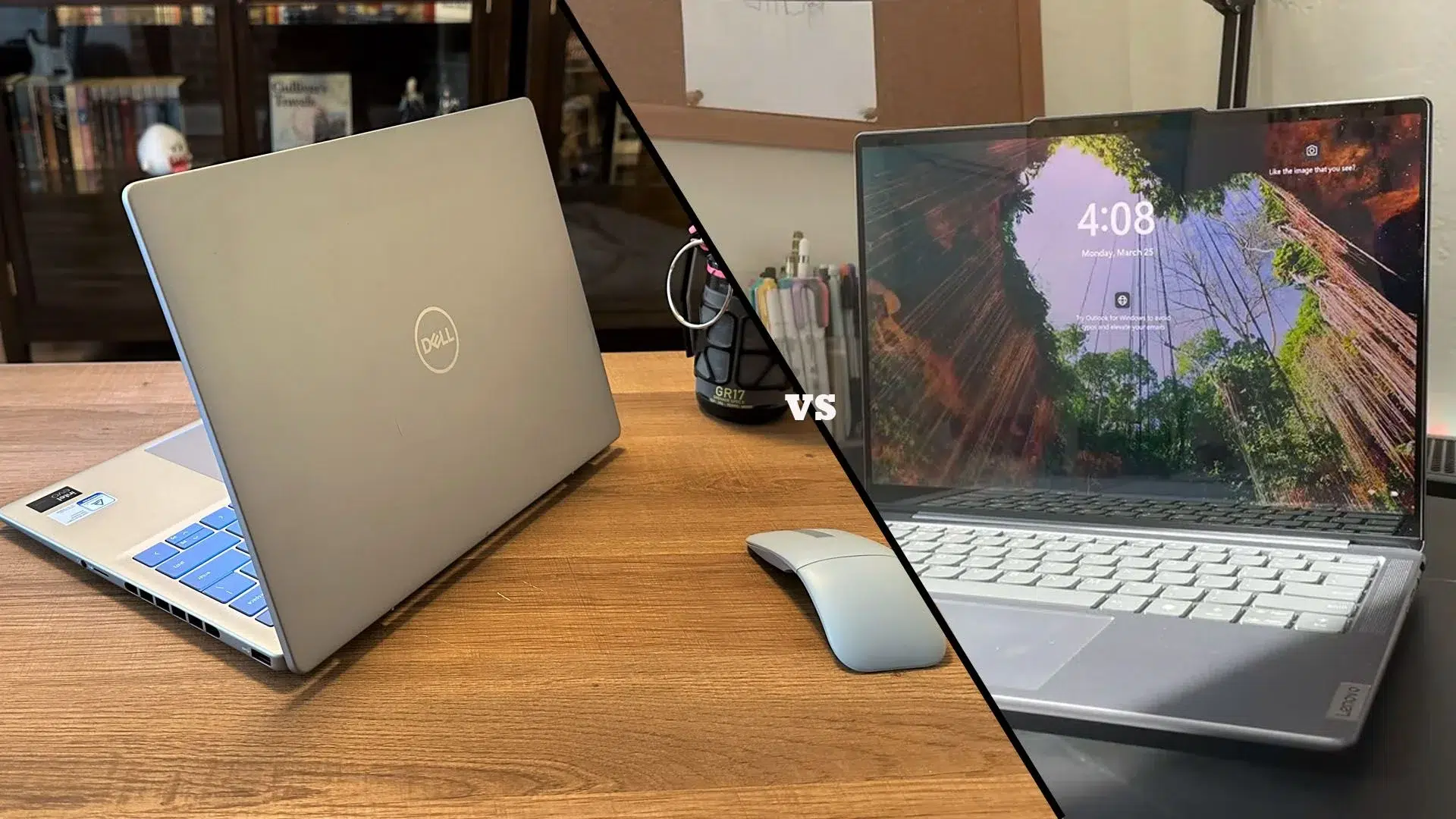
Choosing a workstation laptop in Dubai means balancing demanding software, daily travel and the cost of future upgrades. The Dell Pro Max 16 Premium and Lenovo ThinkPad P16 Gen 3 approach that balance differently.
The Dell is the better starting point for buyers who value a lighter workstation. The ThinkPad is the stronger candidate when memory expansion and larger projects take priority. Your final choice should depend on the exact configuration, rather than the model name alone.
This comparison uses manufacturer specifications and UAE Tech Dubai product listings. It is a specification-based buying guide, not a hands-on benchmark review.
The following configurations were listed by UAE Tech Dubai when researched on 9 October 2026. Prices and availability can change.
| Feature | Dell Pro Max 16 Premium MA16250 | ThinkPad P16 Gen 3 21RQ000NGR |
| Processor | Intel Core Ultra 7 265H | Intel Core Ultra 9 275HX |
| Graphics | NVIDIA RTX PRO 2000 Blackwell, 8GB | NVIDIA RTX PRO 3000 Blackwell, 12GB |
| Installed memory | 64GB LPDDR5x | 64GB DDR5 |
| Included storage | 1TB SSD | 1TB SSD |
| Display | 16-inch, 1920 × 1200, 120Hz | 16-inch, 3840 × 2400 IPS, 60Hz |
| Operating system | Windows 11 Pro | Windows 11 Pro |
| Listed price | AED 14,500 | AED 21,500 |
Explore the Dell Pro Max 16 Premium and Lenovo ThinkPad P16 Gen 3 product pages for the current offers.
These are different specification levels. The AED 7,000 gap is not simply a premium for the Lenovo name: the listed ThinkPad includes a different processor, GPU and screen. Comparing prices without those details can lead to the wrong purchase.
Dell offers the Premium with Intel Core Ultra H-series processors. The linked configuration uses the Ultra 7 265H.
Consider it for a working day that combines design revisions, spreadsheets, meetings and creative applications. Before paying for a higher processor tier, identify what currently slows you down. A delayed file transfer, a full memory allocation and a slow render call for different solutions.
The linked ThinkPad uses the Ultra 9 275HX. Its 24-core configuration provides more CPU resources than the Dell listing’s 16-core chip.
That makes it a candidate for work that can use many cores. However, core counts alone do not establish render times or simulation speed. Cooling, power settings and application behaviour also matter.
For an engineering team in Dubai, the best comparison is a timed run of a representative project. Ask for the exact CPU model and test conditions before relying on a performance percentage.
A search for the best laptop for AutoCAD, Revit or SolidWorks should begin with the type and size of your projects.
The two linked laptops have different professional GPUs. The ThinkPad’s 12GB graphics memory provides more capacity than the Dell’s 8GB configuration. That extra capacity can matter when a workflow must keep substantial scene data in GPU memory; it does not mean every task runs proportionally faster.
Start with the software vendor’s requirements for your version, then consider your largest active project. Avoid buying solely around an application name: reviewing a small drawing and navigating a detailed building model are different workloads.
For professional deployment, confirm the relevant application, graphics driver and hardware certification. A workstation label is not a blanket guarantee for every software version.
Check whether your renderer or AI tool uses the CPU, GPU or both. For GPU workloads, review its memory requirements before comparing headline processing figures.
If your projects already exceed the available graphics memory, selecting more system RAM will not necessarily resolve that limitation. Ask for a quote that specifies both capacities separately.
Dell’s owner’s manual identifies the Pro Max 16 Premium’s RAM as onboard and non-upgradeable, with a maximum configuration of 64GB. The ThinkPad platform has four memory slots and supports up to 192GB of non-ECC RAM.
Choose your Dell memory capacity at purchase. Do not buy a lower-memory Premium expecting to add standard laptop RAM later.
The ThinkPad offers more flexibility if your projects grow. Its higher memory ceiling may suit buyers who expect to run larger datasets or several demanding applications together.
Storage expansion also differs: Dell documents two M.2 SSD slots, while Lenovo lists three. The ThinkPad has one PCIe 5.0 slot and two PCIe 4.0 slots, so fitting a Gen 5 drive does not make every slot operate at Gen 5 speed.
Keep a separate backup plan whichever machine you choose. Additional internal storage is useful for working files, but it should not be your only copy of client work.
The listed Dell favours a faster 120Hz refresh rate, while the listed ThinkPad offers a higher-resolution 3840 × 2400 panel.
For a designer who works mainly on the built-in screen, the ThinkPad’s resolution deserves consideration. For someone who uses a large external display all day, the laptop screen may be a lower purchasing priority.
Do not assume all units share the same panel. Dell also offers a tandem OLED option within the Premium family, but that is not the FHD+ configuration compared in the table.
If colour accuracy affects your deliverables, confirm the exact panel and plan a suitable calibration workflow. Resolution, colour coverage and calibration answer different questions.
Manufacturer starting weights are approximately 2.19kg for the Dell and 2.54kg for the ThinkPad. Add the charger and any adapters when judging what you will carry between your Dubai office, client meetings and home.
Dell is the lighter starting point. The ThinkPad may still be worthwhile if you regularly need its expansion options.
Check connectivity against your actual desk setup. The ThinkPad includes USB-A and wired Ethernet, while Dell’s documented Premium port selection centres on USB-C/Thunderbolt, HDMI and an SD-card slot.
List your monitor, external drives, network cable and peripherals before ordering a dock. Confirm the dock’s power delivery and display support for the chosen laptop.
Neither battery capacity nor a manufacturer’s general claim establishes working time for your projects. Plan access to mains power for extended heavy workloads, and compare battery tests only when their settings and configurations match.
At the observed prices, the Dell leaves AED 7,000 available for other needs. That could fund part of a monitor, backup system, software subscription or support budget.
The ThinkPad becomes easier to justify when its specific advantages solve an existing constraint. Buying extra capacity “just in case” is less convincing than knowing your current project exceeds a practical limit.
Before buying a workstation laptop in the UAE, request a written quote showing the exact configuration, VAT treatment, keyboard layout, warranty coverage and delivery estimate. Confirm which organisation provides warranty service locally.
The Dell Pro Max 16 Premium suits buyers seeking a lighter professional laptop with a lower listed price. The ThinkPad P16 Gen 3 offers more scope for memory growth and a higher-specification local configuration.
Compare both models at UAE Tech Dubai (Berjaya Electronics). Share your software, project size and budget with the team, confirm the final specifications, and order the workstation that fits your work in Dubai and across the UAE.
Is the ThinkPad P16 Gen 3 Always Faster?
No. The configuration and workload determine the result. The linked ThinkPad has higher-tier components, but this guide does not establish a measured performance lead.
Can I Upgrade Dell Pro Max 16 Premium RAM?
No. Its memory is integrated into the system board. Select sufficient RAM before placing your order.
Which Is Better for Architects in Dubai?
Shortlist the ThinkPad for projects needing substantial memory expansion. Consider the Dell when portability matters and the selected configuration meets your design software’s needs. Test a representative model where possible.
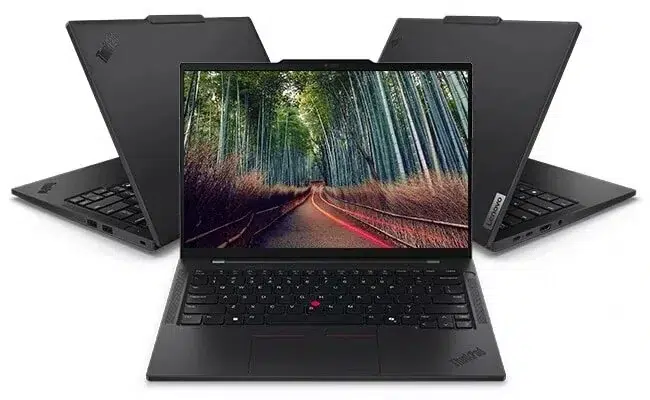
For Dubai professionals, the best ThinkPad depends on what the extra money buys. The ThinkPad T14s Gen 7 is the stronger value choice for everyday business work, while the X1 Carbon Gen 14 is worth considering for its brighter touchscreen and premium portable design.
That verdict becomes clearer when you compare matching configurations. UAE Tech Dubai lists both models with an Intel Core Ultra 7 365 vPro processor, 32GB RAM, 1TB SSD, and Windows 11 Pro. You therefore have a practical choice between screen quality, mobility, and price, rather than simply choosing the laptop with the bigger processor badge.
This guide uses Lenovo’s specifications and UAE Tech Dubai’s product listings to help buyers in Dubai and across the UAE choose the right model.
“ThinkPad T14s” covers several generations and processor platforms. This comparison focuses on the T14s Gen 7 Intel, model 21YVS09R00, and the X1 Carbon Gen 14 Aura Edition, model 21V7006GUS.
These are the matching Core Ultra 7 365 configurations linked below. Older T14s models, AMD versions, and the T14s 2-in-1 can have different screens, processors, ports, and weights.
Check the complete model code before buying a Lenovo business laptop in Dubai. Two listings with similar names can offer quite different experiences.
| Feature | ThinkPad T14s Gen 7: 21YVS09R00 | X1 Carbon Gen 14: 21V7006GUS |
| Processor | Intel Core Ultra 7 365 vPro | Intel Core Ultra 7 365 vPro |
| Memory | 32GB LPDDR5X | 32GB LPDDR5X |
| Storage | 1TB SSD | 1TB SSD |
| Display | 14-inch WUXGA IPS, non-touch | 14-inch WUXGA IPS, touch |
| Resolution | 1920 × 1200 | 1920 × 1200 |
| Listed brightness | 400 nits | 500 nits |
| Listed colour gamut | 45% NTSC | 100% sRGB |
| Battery capacity | 58Wh | 58Wh |
| Operating system | Windows 11 Pro | Windows 11 Pro |
| Displayed price on 7 October 2026 | AED 10,250 | AED 11,250 |
Configuration and price details come from the two product pages. Prices and availability can change.
Both listed laptops use the same processor and offer the same memory and storage capacities. Those specifications make both sensible candidates for spreadsheets, browser-based software, presentations, coding, and video meetings.
There is no basis here for promising a large speed advantage from the X1 Carbon name alone. Cooling, power settings, and workload can affect performance, but a fair speed comparison would require tests of these exact units.
For an accountant, SEO specialist, operations manager, or sales professional, the T14s may already provide the configuration they need. Spend more on the X1 Carbon when its other advantages matter to your working day.
Lenovo specifies soldered memory in both model families, with no RAM slots for later expansion.
Choose your RAM capacity before purchase. The listed 32GB configurations provide useful room for multitasking, but large virtual machines and demanding datasets need a workload-specific assessment. An SSD upgrade and a RAM upgrade are separate questions; do not assume both are possible.
Lenovo lists starting weights of 1.065kg for the T14s Gen 7 Intel family and 0.977kg for the X1 Carbon Gen 14 family with a standard trackpad. These are family minimums; the quoted configurations can weigh more.
The X1 Carbon keeps a portability advantage, but the latest T14s is also a lightweight business laptop. Broad claims that every T14s is substantially heavier overlook the newer design.
For frequent flights and daily client visits, small weight savings can matter. For someone who mainly works at a desk, screen quality, support, and total purchase cost may have more value. Ask for the weight of the exact unit, including the charger you will carry.
The listed T14s has a 400-nit non-touch IPS display with 45% NTSC coverage. The listed X1 Carbon has a 500-nit low-power IPS touchscreen with 100% sRGB coverage.
Both offer the same WUXGA resolution. The X1 Carbon’s advantages are brightness, touch input, and wider colour coverage, rather than a higher pixel count.
For email, documents, and business dashboards, the T14s screen can be a reasonable choice. For reviewing website layouts, brand colours, marketing visuals, or presentations, the X1 Carbon’s panel is more appealing.
If colour accuracy affects paid work, check calibration as well as gamut coverage. A screen specification alone does not guarantee accurate colours.
Also distinguish this X1 Carbon configuration from the family’s OLED options. The linked 21V7006GUS uses IPS; another Gen 14 listing may use a different panel.
Both families have a 58Wh battery, according to Lenovo’s documentation. Equal battery capacity does not establish equal working time.
Screen brightness, processor load, wireless use, and power settings all influence runtime. A day of video calls is different from a day spent editing documents.
For work between Dubai offices, client sites, and shared workspaces, compare battery tests that match the processor and screen you plan to buy. Neither model earns a guaranteed battery-life win from the specifications alone.
Lenovo lists three Thunderbolt 4 ports, one USB-A port, HDMI 2.1, and a headphone/microphone socket on both Intel model families.
That is useful for a desk setup with a dock, external monitor, and peripherals. Check dock compatibility and charging requirements before ordering accessories.
For company purchases, confirm vPro support, camera options, warranty coverage, and your IT team’s deployment requirements on the exact quoted unit. Both retailer listings include Windows 11 Pro.
Lenovo also documents replacement procedures for the X1 Carbon Gen 14’s SSD, battery, keyboard, and USB modules. Lenovo Support KY Its premium design still deserves a practical maintenance assessment, especially if you plan to keep the laptop for several years.
At the displayed prices reviewed on 7 October 2026, theLenovo ThinkPad T14s Gen 7 costs AED 10,250, while the Lenovo ThinkPad X1 Carbon Gen 14 costs AED 11,250.
The difference is AED 1,000, or approximately 9.8% above the T14s price.
For one laptop, the better screen may justify that difference. Across ten laptops, it becomes AED 10,000 before any negotiated discounts. Fleet buyers should match each employee’s workload to the features they will actually use.
Before comparing ThinkPad prices in Dubai, confirm the final payable amount, keyboard layout, warranty service, delivery date, and exact SKU. You can also browse business laptops in UAE to compare other configurations.
If you are still comparing brands, read our ThinkPad X1 Carbon Gen 14 vs Dell XPS 14 comparison.
The ThinkPad T14s Gen 7 is our value recommendation for everyday business work. The X1 Carbon Gen 14 is our recommendation when its brighter touchscreen and portable design justify the extra cost.
Explore both models at UAE Tech Dubai (Berjaya Electronics). Compare the exact configurations, then contact our team for current pricing, stock confirmation, warranty details, and corporate quotations. Choose the ThinkPad that fits your workload and buy with the model details clear.
Is the ThinkPad T14s Better Value Than the X1 Carbon?
For the two listed configurations, the T14s offers the same processor, RAM capacity, and storage capacity for AED 1,000 less. That makes it the stronger value choice when the display upgrade is not essential.
Is the X1 Carbon Gen 14 a 2-in-1 Laptop?
It is a conventional laptop. Buyers who need tablet mode and pen input should consider the ThinkPad T14s 2-in-1 Gen 1, a separate convertible model.
Can You Upgrade the RAM Later?
Both compared model families use soldered RAM. Choose sufficient memory when ordering; a later RAM upgrade is not available.

Choosing between the Samsung Galaxy Book6 and MacBook Air M5 starts with one question: which laptop fits the way you work? For buyers in Dubai, that includes software compatibility, portability, screen quality and the support attached to the exact model being sold.
The Galaxy Book6 makes sense when you need Windows and useful built-in connections. The MacBook Air M5 deserves a place on your shortlist if you prefer macOS, a lightweight design and close integration with your Apple devices.
This Samsung Galaxy Book6 vs MacBook Air M5 comparison explains those trade-offs and what to check before buying in the UAE. It is based on published specifications, rather than hands-on testing by UAE Tech Dubai.
Galaxy Book6, Galaxy Book6 Pro and Galaxy Book6 Ultra are different products. Their screen technology, processors, graphics and prices should not be treated as interchangeable.
Samsung’s standard Core Ultra Galaxy Book6 configurations include 14-inch and 16-inch IPS displays. The Pro models use AMOLED touchscreens. Other regional configurations exist, so the model code matters more than the family name alone.
For example, UAE Tech Dubai lists the Samsung Galaxy Book6 Pro with a Core Ultra 7 356H processor, 32GB RAM and a 1TB SSD. That is a premium Pro configuration, rather than the standard Book6 discussed below.
| Buying consideration | Galaxy Book6, standard Core Ultra models | MacBook Air M5 |
| Operating system | Windows 11 | macOS |
| Screen choices | 14-inch or 16-inch IPS; touch on selected models | 13.6-inch or 15.3-inch Liquid Retina; no touchscreen |
| Processor | Intel Core Ultra options; check the SKU | Apple M5 |
| Main connection advantage | USB-A and HDMI alongside USB-C on specified models | Two Thunderbolt 4 ports and separate MagSafe charging |
| Strongest practical fit | Windows workflows and existing office accessories | Portable macOS work and Apple device integration |
Use this table to narrow your choice, then compare the exact RAM, storage and screen size in each quote. A 32GB/1TB Samsung should not be judged against a 16GB/512GB MacBook on price alone.
Choose the Galaxy Book6 when your daily work depends on Windows applications, company tools or device drivers. Before switching platforms, check accounting software, engineering applications, printer utilities and any specialist Excel add-ins your team uses.
For browser-based work, think about what runs together. An online meeting, a large spreadsheet and several browser windows create a different workload from checking email. Memory capacity can matter more to that experience than choosing a laptop by its processor badge.
If you are comparing business laptops in UAE, list your required applications first. Then shortlist configurations that meet their requirements and your company’s IT policies.
The MacBook Air M5 starts with 16GB unified memory and 512GB storage. Apple also offers higher memory and storage configurations, allowing you to choose more room for demanding projects.
It is a sensible option for users whose work already fits macOS: writing, presentations, browser-based marketing tools and compatible creative applications. Its fanless design also suits quiet study spaces and shared offices.
There is no universal performance winner without matching the Samsung processor, memory and workload. If your purchase depends on export speed or a specialist application, look for a test of that exact task and configuration.
Samsung’s published standard Core Ultra Book6 specifications list WUXGA IPS panels at 1920 × 1200, with 350-nit brightness. Apple’s 13.6-inch Air lists 2560 × 1664 resolution and 500-nit brightness.
On those specifications, the smaller Air offers a sharper, brighter screen. A 16-inch Book6 instead gives you a larger physical workspace, which may suit side-by-side documents and spreadsheets. These are different benefits; screen size alone does not determine display quality.
If an AMOLED touchscreen is a priority, compare the MacBook Air with the Book6 Pro. Do not assume a standard Galaxy Book6 includes the Pro’s display features.
Touch can be useful for navigating documents or presenting work to a client. For photo and design work, also check colour requirements and the display settings you will use. Buyers considering Samsung’s range can browse the Samsung products at UAE Tech Dubai and confirm the exact panel before ordering.
Apple rates the MacBook Air M5 for up to 18 hours of video streaming and up to 15 hours of wireless browsing. These are manufacturer test figures, not a promise of the same runtime during video meetings or editing.
Samsung’s battery claims also depend on the model and test conditions. In particular, a headline figure for the Book6 Pro or Ultra should not be applied to the standard Book6. Comparing different manufacturers’ video playback figures does not establish a real-world winner.
For portability, the 13-inch Air weighs 1.23kg. Samsung lists the standard 14-inch Core Ultra Book6 at 1.48kg, with regional variation possible. That makes the smaller Air an attractive choice if you carry your laptop between classes, client meetings and shared workspaces.
Include the charger and any adapters when judging travel weight. A laptop that is lighter by itself may need extra accessories for your daily setup.
A built-in HDMI or USB-A port can save time when you connect a meeting-room screen, flash drive or older accessory. Check the actual Book6 listing, including what its USB-C ports support, before choosing a dock.
The Air’s Thunderbolt 4 connections suit compatible displays and accessories, while MagSafe provides separate charging. Budget for an adapter if your regular setup requires HDMI or USB-A.
Your phone can also influence the decision. Samsung offers supported Galaxy-device features such as Multi Control and Second Screen. Apple offers Continuity features across compatible Apple devices. Check the requirements for the feature you intend to use; owning a phone from the same brand does not guarantee every integration is available.
When comparing the Samsung Galaxy Book6 price in UAE with the MacBook Air M5 price in Dubai, request quotes for clearly identified configurations. There is no single meaningful price for either range.
Ask the seller to confirm:
For imported configurations, ask who handles a repair in the UAE. Do not assume that an overseas model carries the same service arrangements as a locally distributed unit.
Also include the cost of docks, storage and software changes. The lower initial price is less useful if you must replace essential applications or buy several adapters to keep working.
You need Windows, want connections for existing accessories, or prefer to keep a familiar work setup. It is especially worth considering when the exact configuration meets your software needs at a competitive local price.
Choose the Pro separately if you specifically want its AMOLED touchscreen. That upgrade should solve a need you have, rather than simply add a more expensive model name.
You are comfortable with macOS, value a fanless laptop and want a portable machine that fits your Apple setup. Check every essential application before moving from Windows, especially if your work depends on specialist software or add-ins.
For students, course requirements should lead to the decision. For business buyers, compatibility with the company’s tools and support policies should come first.
The Samsung Galaxy Book6 vs MacBook Air M5 decision comes down to software, mobility and the exact offer. Choose Samsung when Windows compatibility and useful connections fit your workflow. Choose the Air when macOS, quiet operation and portability are your priorities.
Ready to choose? Visit UAE Tech Dubai (Berjaya Electronics) to compare laptop options and request a current quote. Explore the listed Galaxy Book6 Pro configuration, or ask the team to confirm MacBook Air M5 availability, specifications and warranty before placing your order.
Is the Galaxy Book6 better than the MacBook Air M5?
It can be the better fit for Windows-dependent work and built-in connections. The Air may suit you better for portable macOS use. The right choice depends on the exact configuration and your applications.
Does every Samsung Galaxy Book6 have an AMOLED screen?
No. Standard Book6 models use IPS panels, while the Book6 Pro offers AMOLED. Check the full model name and product specifications.
Is 16GB RAM enough for work and study?
It is a reasonable starting point for everyday documents, browsing and meetings. Consider more memory for large creative projects, virtual machines or heavy multitasking, based on the requirements of your software.
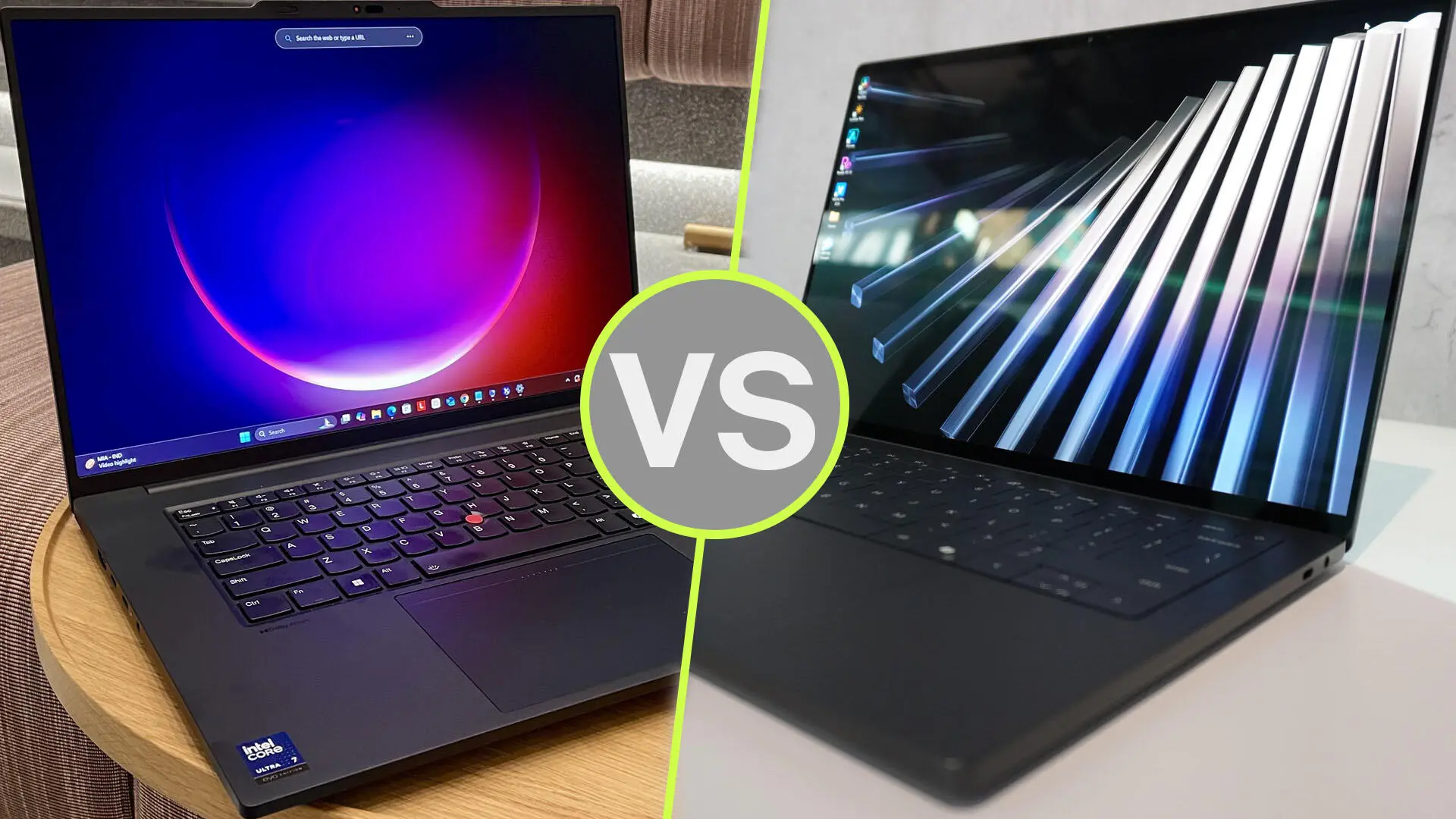
Choosing a mobile workstation in Dubai starts with one question: what work must it handle without slowing you down? An architect reviewing drawings between meetings has different needs from a visualisation artist rendering detailed interiors.
The Dell Pro Precision 7 vs Lenovo ThinkPad P16 Gen 3 comparison reflects that difference. The Dell configuration discussed here offers a compact 14-inch format. The ThinkPad provides a larger workspace and dedicated NVIDIA RTX PRO graphics options.
Our buying recommendation: shortlist the ThinkPad P16 Gen 3 for demanding graphics workflows and memory expansion. Choose the Dell Pro Precision 7 14 when carrying convenience and a compact working setup matter more. This is a specification-based assessment, not a hands-on benchmark comparison.
“Dell Pro Precision 7” does not identify one fixed configuration. This guide focuses on the Dell Pro Precision 7 14 PW714260 listed by UAE Tech Dubai, with a Core Ultra X7 368H vPro processor, 64GB RAM, 2TB SSD and Intel Arc B390 graphics.
That distinction matters. You should not assume this particular Dell includes a dedicated NVIDIA GPU simply because it belongs to a workstation range. Dell documents Arc B390 and Arc Pro B390 as integrated graphics using shared system memory.
On the Lenovo side, the ThinkPad P16 Gen 3 offers several processor, display and RTX PRO combinations. Compare the complete specifications on your quotation before choosing either brand.
| Buying consideration | Dell Pro Precision 7 14 compared here | Lenovo ThinkPad P16 Gen 3 |
| Screen size | 14 inches | 16 inches |
| Graphics | Integrated Intel Arc B390; shared memory | Dedicated NVIDIA RTX PRO Blackwell options |
| Memory | Listed with 64GB; onboard and not upgradeable | Four memory slots; up to 192GB non-ECC on supported configurations |
| Storage | Listed with a 2TB SSD | Capacity depends on the selected configuration |
| Main buying appeal | Compact format for a mobile working day | Expansion and dedicated graphics for heavier projects |
| Key check | Confirm software support for Intel graphics | Confirm the exact RTX PRO model and VRAM |
These differences describe configurations and platform capabilities. They do not establish a measured speed advantage in every application.
For primarily 2D drafting, drawing markups and client presentations, start with your software requirements and typical file sizes. Paying for a higher GPU tier may bring little value if most of your day involves documents and modest drawings.
The Dell deserves consideration for this workflow because of its compact format. Before purchase, ask to test a representative project with your preferred graphics driver and application version.
For a Dubai consultant travelling between offices, being able to carry the laptop comfortably can matter as much as a benchmark score.
If you are comparing the best laptop for Revit or SolidWorks, move beyond processor branding. Ask how much memory your largest project uses, whether the application benefits from a certified graphics configuration, and how demanding your viewport becomes.
The ThinkPad is the more suitable starting point when dedicated graphics and future memory expansion are priorities. However, an entry RTX PRO configuration and a higher-tier version will not deliver identical results.
For professional applications, check certification for the actual GPU, driver and software release. NVIDIA’s certification resources are useful for this check; a workstation label alone should not replace it.
The key distinction is the graphics platform. The Dell’s integrated Arc graphics share system memory. The ThinkPad’s RTX PRO options have dedicated video memory, with Lenovo listing configurations from RTX PRO 1000 through RTX PRO 5000 Blackwell.
For GPU rendering, verify which acceleration methods your rendering engine supports. If your workflow specifically requires NVIDIA CUDA, choose a compatible NVIDIA configuration. Do not assume that a different graphics platform can run the same acceleration path.
For local AI, start with the model and software you intend to use. Check memory requirements, supported frameworks and driver compatibility before comparing marketing claims about AI performance.
The right amount depends on your scenes, textures, model size and application. Buying the largest available GPU is not automatically the best use of your budget.
A practical approach is to measure the memory used by a real project, allow room for growth, and request a suitable configuration. If projects exceed the GPU’s available memory, behaviour varies by application: performance may fall, or the workload may fail to run.
For demanding 3D work, prioritise software compatibility and adequate VRAM before spending on cosmetic features.
Dell’s documentation states that the PW714260 uses onboard LPDDR5x memory, with a maximum of 64GB. It cannot be upgraded later. Buy sufficient memory at the outset.
The ThinkPad P16 Gen 3 has four memory slots. Lenovo lists support for up to 192GB non-ECC memory or 128GB ECC memory, depending on configuration. Those are platform limits, not the amount installed in every unit.
That expansion potential is useful if you expect larger datasets, additional virtual machines or more demanding projects over the laptop’s working life.
For storage, estimate the space needed for applications, active projects, asset libraries and temporary files. A larger SSD can reduce file juggling, but it does not replace a backup.
The Dell’s 14-inch screen favours a compact setup. The ThinkPad’s 16-inch screen offers more physical room for drawings, timelines and application panels.
Neither screen size is universally better. If you spend most days at a desk with an external monitor, the smaller laptop may suit you well. If you regularly work directly on the laptop display, the larger screen may be worth carrying.
Check the exact panel specification. Resolution, brightness, colour coverage and surface finish vary between configurations. A high-resolution display also requires suitable scaling so text and controls remain comfortable.
For buyers searching for a mobile workstation in Dubai, compare the complete travel setup: laptop, charger, adapters and bag. Avoid choosing solely from the laptop’s weight or an unverified battery-life claim.
At the research check, UAE Tech Dubai displayed the Dell Pro Precision 7 14 PW714260 at AED 12,999. Its ThinkPad P16 Gen 3 21RQ000PGR listing displayed AED 29,900.
These are different configurations, so the price gap is not a like-for-like brand comparison. Prices and availability can change.
Before ordering the Lenovo listing, confirm the supplied GPU: its title states RTX PRO 4000 16GB, while one specifications entry states RTX PRO 3000 12GB. Ask for the confirmed GPU and VRAM on your quotation.
For either laptop, also confirm the keyboard layout, warranty provider, UAE service coverage, delivery date and final payable total.
If your work mainly involves office applications, compare the wider business laptops available in Dubai before committing to a workstation.
Choose the GPU tier around your applications and projects. The highest-priced configuration is only worthwhile when its additional resources address a real need.
For the configurations discussed, the ThinkPad P16 Gen 3 is our preferred starting point for demanding graphics work and expansion, while the Dell Pro Precision 7 14 suits buyers who prioritise a compact workstation.
Explore both products at UAE Tech Dubai (Berjaya Electronics). Share your software list, project sizes and budget with the team, request a confirmed configuration and current UAE quotation, then buy the workstation that fits your working day.
Is the ThinkPad P16 Gen 3 Better for 3D Rendering?
It is the stronger shortlist candidate when your renderer benefits from a supported NVIDIA RTX PRO GPU. The actual result depends on the GPU configuration, scene, rendering engine and power settings. No direct performance percentage is claimed here.
Can I Upgrade the Dell Pro Precision 7 14 RAM?
No. Dell specifies onboard, non-upgradeable memory for the PW714260. Select the required capacity when buying.
Is a Mobile Workstation Necessary for Every Engineer?
No. Choose around your software and project complexity. Drawing reviews and office work may need less hardware than large assemblies, simulations or GPU rendering.
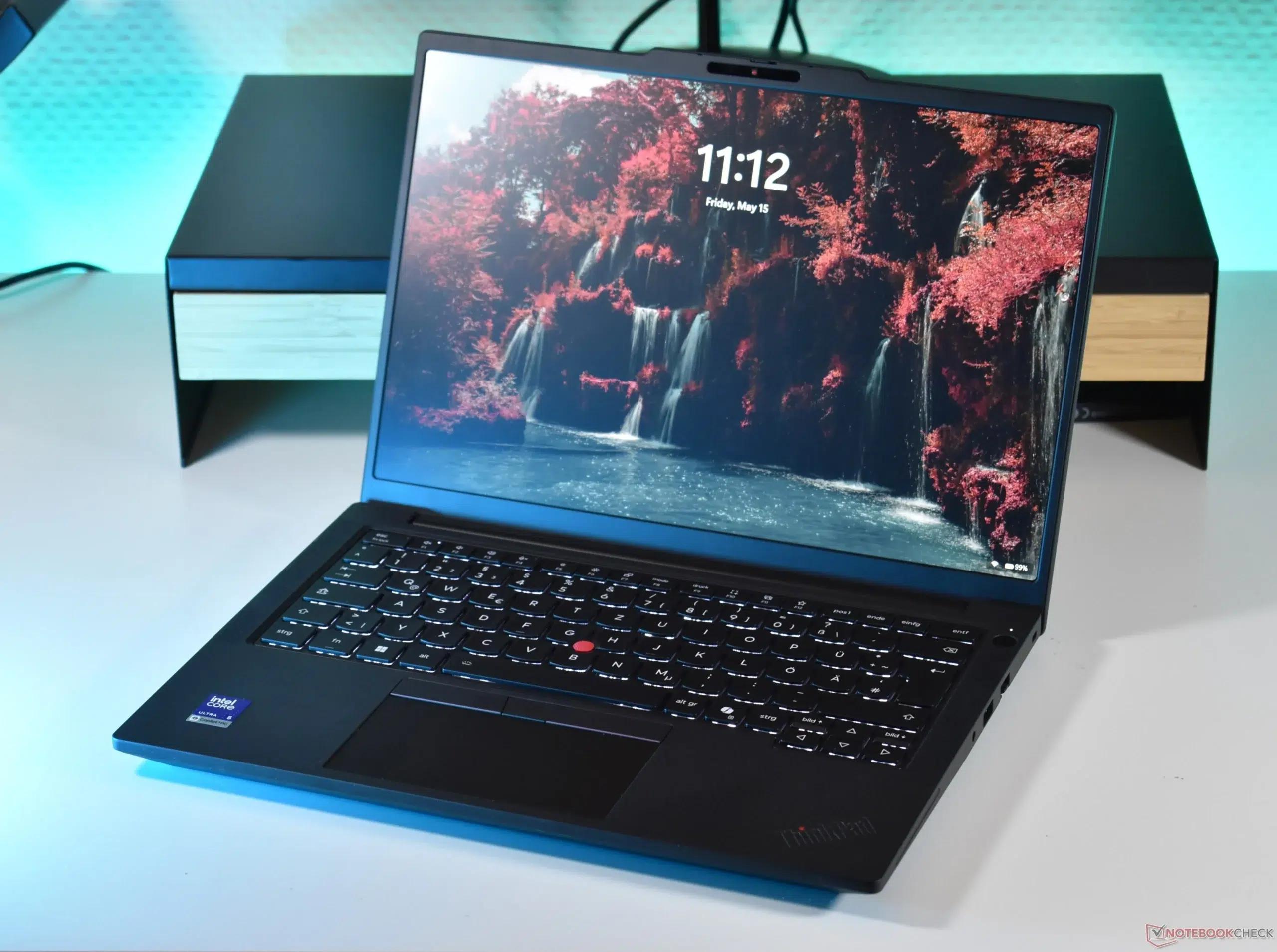
Choosing between the Lenovo ThinkPad X1 Carbon Gen 14 and Dell XPS 14 comes down to how you work. Do you carry your laptop between meetings across Dubai, or spend most of your day at a desk with a monitor and dock?
Our recommendation: choose the ThinkPad X1 Carbon Gen 14 for frequent travel and convenient business connectivity. Choose the Dell XPS 14 if its screen, design and exact configuration suit your needs at a better total price. Neither brand wins every comparison.
This guide compares the ThinkPad X1 Carbon Gen 14 Aura Edition with the 2026 Dell XPS 14, model DA14260. The older XPS 14 9440 also appears in UAE stores, but it is a different laptop. We explain that distinction below.
| Feature | ThinkPad X1 Carbon Gen 14 | Dell XPS 14 (2026) |
| Processor family | Intel Core Ultra Series 3 | Intel Core Ultra Series 3 |
| Screen options | 14-inch WUXGA IPS or 2.8K OLED | 14-inch 2K LCD or 2.8K OLED |
| Starting weight | Approximately 1kg | 1.36kg OLED; 1.38kg LCD |
| Battery capacity | 58Wh | 70Wh |
| Thunderbolt 4 | Three ports | Three ports |
| Built-in USB-A and HDMI | Yes | No |
| Best fit in this guide | Mobile professionals using varied office equipment | Buyers comfortable with a USB-C setup |
Specifications vary by configuration and region. Starting weights do not describe every unit. Compare the full model number before ordering.
The ThinkPad’s lower starting weight gives it a practical advantage if your laptop travels with you every day. That matters when your bag also contains a charger, documents, phone accessories and other work equipment.
For a consultant moving between Business Bay and DIFC, or a sales professional visiting customers across the UAE, carrying less can be more useful than buying the highest processor tier.
Consider your complete travel setup. A lightweight laptop loses some of its advantage if you also need several adapters and a heavy charger.
The XPS remains a portable option, but the ThinkPad has the weight advantage on the listed starting configurations. If you mostly drive to one office and connect to a dock, that difference may matter less.
Before deciding, check the actual unit’s weight and handle both laptops if possible. Screen finish, palm-rest comfort and how easily the device fits into your bag are personal preferences that a specification table cannot settle.
Both product families offer current Intel Core Ultra processors, but sharing a processor family does not mean every configuration performs equally. CPU tier, cooling, power settings and memory all affect the result.
For email, Microsoft 365, browser-based tools and video meetings, start by choosing enough memory for your workload. There is little value in paying for a faster processor while leaving yourself short of RAM.
These are buying guidelines, not application-specific requirements. Check your software’s needs and leave room for future projects.
If you work with demanding 3D models, GPU rendering or large AI workloads, assess a workstation separately. A premium business laptop is not automatically the right tool for every professional application.
Screen choice deserves as much attention as the processor. Think about what you look at for eight hours, where you work and whether you use an external monitor.
A lower-resolution, non-OLED configuration can be a sensible choice for office work. Check brightness, reflections and text clarity rather than assuming the most expensive panel will be the most comfortable.
In a bright Dubai office, screen placement also matters. A window directly behind you can make reflections distracting even on an otherwise excellent display.
OLED is worth considering when contrast and rich colour matter. Lenovo offers a 2.8K OLED option with a 120Hz variable refresh rate, while Dell also lists a 2.8K OLED configuration.
However, a panel label alone does not establish suitability for colour-critical work. Check the exact panel specifications and calibration requirements. If you mainly work on a separate monitor, spending more on laptop memory may be the better investment.
The ThinkPad includes a TrackPoint and offers conventional or haptic touchpad configurations. Try the exact version you intend to buy, especially if you write reports, proposals or code for long periods.
Keyboard preference is personal. Check the layout, key spacing and shortcut placement instead of choosing solely on brand reputation.
Connectivity is a clearer distinction. The ThinkPad’s USB-A and HDMI ports can simplify connecting office peripherals and presentation screens. The XPS’s Thunderbolt ports support a USB-C-based setup, but HDMI displays and USB-A accessories require suitable adapters or a dock.
For a fixed desk, a dock can be convenient. For meetings in unfamiliar rooms, built-in connections reduce the equipment you need to remember.
The XPS has the larger rated battery, but capacity alone cannot establish which laptop lasts longer in your working day.
Display choice, brightness, video calls, background apps and processor load all change power use. A light document-editing session is very different from an afternoon of Teams calls and screen sharing.
Compare battery tests only when the configurations and test conditions are similar. Manufacturer video-playback claims should not be treated as guaranteed office runtime.
For travel around Dubai or between emirates, choose a configuration that meets your performance needs without paying for features you rarely use. Check charger compatibility and include the charger in your portability comparison.
Security requirements should come from your organisation’s IT team. Lenovo lists a discrete TPM 2.0, a fingerprint reader and camera privacy features for the X1 Carbon family, with some capabilities dependent on configuration.
Do not assume every premium laptop includes the same enterprise management options or Windows edition. Ask the seller to confirm your requirements in writing.
Before buying either model, check:
A lower purchase price may be less attractive if the support arrangement does not meet your business needs.
When searching for Dell XPS 14 Dubai, check the model number carefully. The XPS 14 9440 is not the 2026 DA14260 compared above.
UAE Tech Dubai lists a Dell XPS 14 9440 with RTX 4050 graphics. This older configuration has its own specifications and should be assessed separately. Do not apply the 2026 model’s weight, screen or battery details to that listing.
If you need NVIDIA-specific software support, the older RTX-equipped model may deserve consideration. Confirm application compatibility and compare its price with suitable workstation alternatives.
For the ThinkPad X1 Carbon Gen 14 price in UAE, request a quotation for the exact processor, memory, display and warranty you want. Compare AED totals on the same basis, including whether VAT, delivery and required accessories are included.
The ThinkPad X1 Carbon Gen 14 is our stronger recommendation for professionals who travel frequently and need flexible connectivity. The Dell XPS 14 is worth choosing when its exact configuration, display and total cost better match your working day.
Ready to choose your next business laptop? Browse business laptops in Dubai from UAE Tech Dubai (Berjaya Electronics). Ask our team for current ThinkPad X1 Carbon Gen 14 availability or help choosing the right Dell XPS 14 generation.
Visit UAE Tech Dubai to confirm your preferred configuration, latest AED price and warranty, then place your order with the details agreed.
Which Is Better for Frequent Business Travel?
The ThinkPad X1 Carbon Gen 14 is our pick for its lower starting weight and useful built-in connections. Your preferred screen and final configuration still matter.
Is the Dell XPS 14 Suitable for Office Work?
Yes, a correctly configured XPS 14 can suit office work. Confirm memory, Windows edition, docking needs and company software compatibility before ordering.
Should I Choose 16GB or 32GB RAM?
Choose 16GB for moderate office workloads. Consider 32GB if you regularly combine large spreadsheets, many browser tabs, development tools and video meetings.
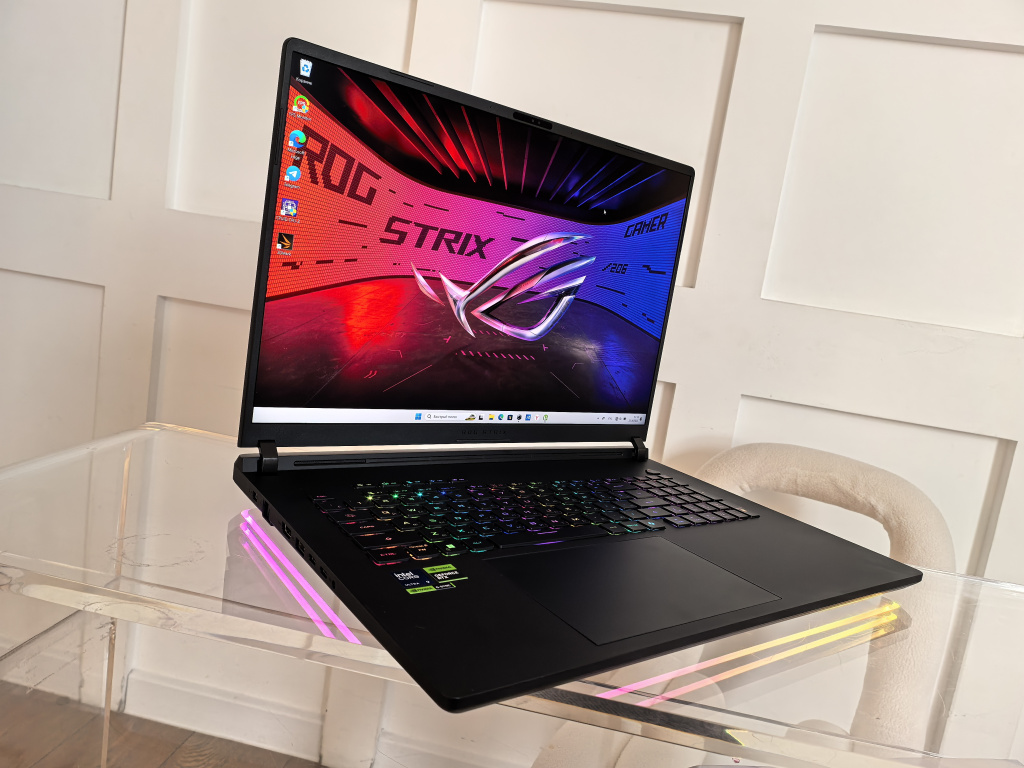
For most buyers focused on gaming value, the RTX 5080 is the sensible starting point. The RTX 5090 becomes more attractive when you need 24GB of graphics memory, want maximum performance, or find a small price gap between otherwise matching configurations.
If you are shopping for an ASUS ROG Strix SCAR 18 in Dubai, compare more than the GPU badge. The model year, screen, RAM, storage, operating system and warranty can all change what you get for your money.
This guide compares the laptop GPUs using manufacturer specifications and published reviews. It is a buying analysis, not a claim of hands-on testing.
Both GPUs belong to NVIDIA’s Blackwell generation. Here are the specifications that matter when comparing equivalent SCAR 18 configurations:
| Feature | RTX 5080 Laptop GPU | RTX 5090 Laptop GPU |
| Graphics memory | 16GB GDDR7 | 24GB GDDR7 |
| CUDA cores | 7,680 | 10,496 |
| Memory bandwidth | 896GB/s | 896GB/s |
| ASUS-listed maximum GPU power | Up to 175W with Dynamic Boost | Up to 175W with Dynamic Boost |
| Buyer priority | Gaming value | Maximum performance and more VRAM |
The RTX 5090 has 50% more graphics memory, but that does not mean 50% more gaming performance. More processing cores do not translate directly into the same percentage increase in frame rates, either.
These are Laptop GPUs. Desktop RTX 5090 and RTX 5080 reviews are not a reliable guide to the performance gap inside a gaming laptop.
A laptop sold in 2026 is not necessarily the 2026 model. This distinction matters when comparing ASUS ROG Strix SCAR 18 prices in the UAE.
ASUS lists the 2025 SCAR 18 with an Intel Core Ultra 9 275HX and an 18-inch 2560 × 1600 Mini LED display at 240Hz. Its 2026 specifications list a Core Ultra 9 290HX Plus and a 3840 × 2400 display, with 240Hz available through the specified GPU mode.
That means a discounted 2025 RTX 5090 model and a 2026 RTX 5080 model are not a simple GPU comparison. You are also comparing processors, screens and potentially other components.
Match the full product code and specifications before deciding which deal is better.
For buyers considering the 2025 model’s native resolution, the RTX 5080 deserves serious attention. Paying a large premium for the RTX 5090 only makes sense if its advantage matters in the games and settings you use.
Windows Central’s 2025 SCAR 18 review recommended the RTX 5080 configuration on value grounds. Its gaming comparison included a different RTX 5080 laptop, so the findings should not be presented as a controlled test of two identical SCAR 18 machines.
The practical lesson is to avoid assuming that the highest GPU number guarantees the best purchase. Look for benchmarks that match the laptop’s power settings, resolution and memory configuration.
A higher resolution and demanding visual effects give you stronger reasons to consider the RTX 5090. However, the flagship GPU is not a promise of smooth native-resolution gaming with every setting maximised.
For example, Tom’s Hardware recorded 21 FPS in Cyberpunk 2077 at its 4K ray-tracing Ultra test settings on the 2026 RTX 5090 SCAR 18. That is one specific test, not a prediction for every game, but it shows why settings and upscaling still matter.
If you plan to use a 4K external monitor or buy the newer high-resolution model, check results for your favourite games before spending extra.
Both GPUs support NVIDIA’s DLSS feature family, including Multi Frame Generation in supported games. You do not need the RTX 5090 simply to access that feature.
When reading benchmark charts, separate native rendering, upscaling and frame generation results. A high displayed FPS figure with generated frames is not the same measurement as native FPS or input responsiveness.
The RTX 5080’s 16GB and RTX 5090’s 24GB refer to dedicated graphics memory, separate from the laptop’s system RAM.
Extra VRAM becomes useful when a workload approaches the smaller GPU’s capacity. High-resolution textures, large mod packs and demanding graphics settings can increase memory use, but requirements vary by game.
Do not buy solely on a vague promise of being “future-proof.” Check whether the games you actually play need the additional capacity at your chosen settings.
The stronger argument for 24GB can be professional work. If a GPU-rendered scene or local AI workload exceeds 16GB but fits within 24GB, the larger memory pool may change what you can run comfortably.
That is a capacity advantage, not a guaranteed speed increase across every application. Software support, model size, project complexity and system RAM still matter.
For paid creative work, compare the upgrade cost against measurable time saved or projects enabled. For routine editing and occasional creative tasks, establish a real bottleneck before paying for the flagship.
At the time of research, UAE Tech Dubai listed the ASUS ROG Strix SCAR 18 G835LX-SA114 RTX 5090 at AED 24,999 with:
The page also listed a 12-month warranty and estimated UAE delivery of two to three days. Confirm the current price, stock, delivery estimate and warranty coverage before ordering.
DOS matters: do not assume that a licensed copy of Windows is included. Ask about the cost and availability of Windows installation if you need it.
A matching SCAR 18 RTX 5080 listing was not verified during research. Request a current quotation rather than comparing this product with an unrelated overseas price.
Calculate the premium using:
(RTX 5090 price − RTX 5080 price) ÷ RTX 5080 price × 100
As a hypothetical example, AED 20,000 versus AED 25,000 means paying 25% more. These figures illustrate the calculation; they are not store quotations.
If matching benchmarks showed only 10% more performance in your games, that hypothetical purchase would offer worse gaming performance per dirham. You might still choose it for the extra VRAM, but you would understand what the premium buys.
Equalise RAM, SSD capacity, operating system and warranty before applying this comparison.
ASUS specifies up to 175W GPU power for both configurations discussed here. That shared ceiling helps explain why hardware specifications alone cannot predict the performance gap. Actual power allocation also depends on operating conditions.
Treat the SCAR 18 as a machine for a desk-based setup. For long gaming sessions in Dubai, keep its vents clear, use a hard surface and avoid operating it in excessive ambient heat.
Compare performance using the supplied power adapter and equivalent performance profiles. Silent-mode results should not be compared with another machine running its most aggressive settings.
If portability matters more than screen size, browse other gaming laptops in Dubai and the UAE before committing to an 18-inch system.
Your main goal is gaming, you want strong value, and the RTX 5090 carries a substantial premium. It is also the more practical starting point when you have no identified need for more than 16GB VRAM.
You have a workload that benefits from 24GB VRAM, value every available performance gain, or receive a competitive quotation for an otherwise equivalent configuration. Buy it because the added capability serves your needs, not simply because it tops the range.
The RTX 5080 is the value-focused choice; the RTX 5090 is easier to justify when you need its larger VRAM capacity or can obtain it at a modest premium.
Ready to buy? Explore the ASUS ROG Strix SCAR 18 RTX 5090 at UAE Tech Dubai, or contact UAE Tech Dubai (Berjaya Electronics) for a matching RTX 5080 quotation. Compare the complete specification, confirm warranty and Windows requirements, and choose the configuration that makes sense for your gaming or creative work.
Is the RTX 5090 laptop GPU much faster than the RTX 5080?
There is no single percentage that applies to every game or laptop. Compare matching systems, settings and power profiles. More cores and VRAM do not guarantee proportionate FPS gains.
Can I upgrade an RTX 5080 SCAR 18 to an RTX 5090 later?
Do not plan on a conventional GPU upgrade. Choose the graphics configuration when buying; ASUS lists RAM and SSD expansion options separately.
Does the listed SCAR 18 RTX 5090 come with Windows?
The G835LX-SA114 listing checked at UAE Tech Dubai specifies DOS. Confirm an appropriate Windows licence and installation arrangement before purchase.